
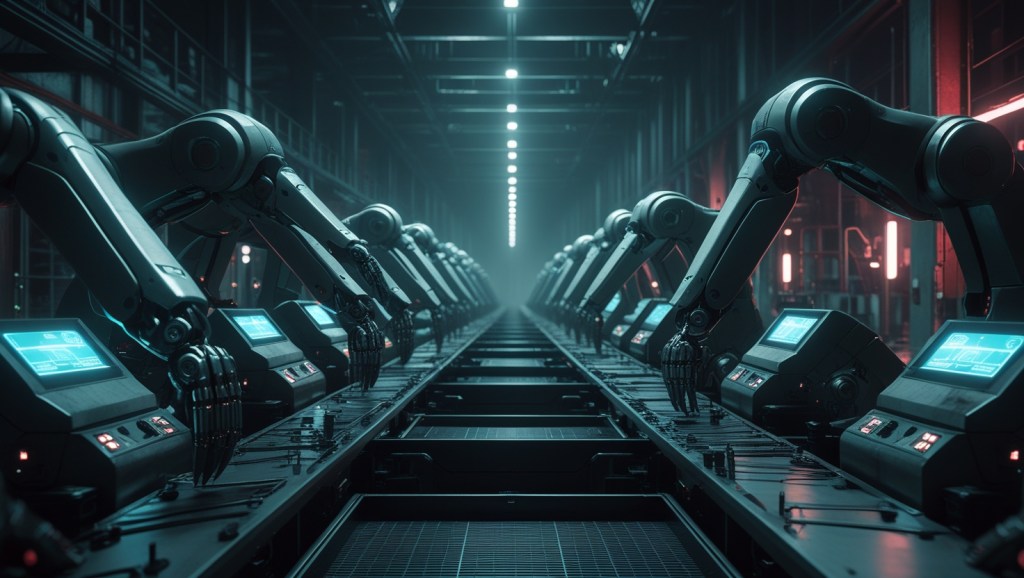
The promises were grand: AI would free us from menial tasks, boost productivity, and create a new era of innovation. But beneath the sleek marketing and optimistic headlines, a darker truth is emerging—automation is killing jobs at an alarming rate.
While Big Tech reaps the rewards, millions of workers around the world are being left behind. And make no mistake: this is just the beginning.
The False Promise of Productivity
For years, we’ve been sold the idea that AI and automation would “augment” human labor, not replace it. In reality, the opposite is happening.
Corporations are deploying AI-driven systems not to make workers more productive, but to reduce headcount and cut costs.
- Call centers are replacing human agents with chatbots.
- Retailers are automating checkouts and inventory management.
- Logistics companies are rolling out robotic warehouses.
- Content platforms are using AI to generate articles, videos, and marketing materials—often replacing human creatives.
The result? A relentless wave of job losses, particularly in sectors with routine, repeatable tasks.
Industries at Risk: Who’s Losing Jobs First
Certain industries are already feeling the sharpest impacts of AI-driven automation:
| Industry | Automation Impact | Jobs at Risk |
|---|---|---|
| Customer Service | Very High | Millions globally |
| Retail & E-commerce | High | Cashiers, stock clerks |
| Media & Content | High | Writers, video editors |
| Transportation | Growing rapidly | Drivers, delivery workers |
| Manufacturing | Extremely High | Assembly line workers |
The takeaway: No job is truly safe anymore—not even creative or knowledge-based roles once thought immune to automation.
Big Tech’s Silent War Against Human Labor
Why is this happening so fast? Simple: profits.
AI tools are cheap to deploy and scale. They don’t take sick days. They don’t unionize. They don’t ask for raises.
Big Tech and major corporations see an opportunity to slash labor costs and maximize shareholder returns—and they’re taking it, with little regard for the social consequences.
Governments, meanwhile, are struggling to keep up. Policy frameworks are outdated, and protections for displaced workers are inadequate. The tech lobby, flush with cash, is ensuring that regulation moves slowly—if at all.
How to Future-Proof Your Career in an AI World
So, what can you do? You can’t stop AI—but you can adapt.
Here are practical steps to future-proof your career:
1. Focus on Uniquely Human Skills
AI excels at pattern recognition and automation. It struggles with:
- Emotional intelligence
- Complex problem-solving
- Strategic thinking
- Creativity grounded in human experience
Invest in these areas.
2. Embrace Lifelong Learning
Standing still is a recipe for obsolescence. Regularly update your skills—especially in areas where AI is weak.
- Take online courses
- Attend workshops
- Read broadly outside your field
3. Leverage AI as a Tool, Not a Threat
Understand how AI works in your industry—and learn to use it to your advantage. Those who can collaborate with AI tools will remain more competitive than those who resist them.
4. Build a Personal Brand and Network
Your reputation, relationships, and ability to connect with others can’t be easily automated. Cultivate them.
We are at a pivotal moment. AI is transforming the global economy faster than most people realize.
While the elites of Silicon Valley celebrate, countless workers face uncertainty, displacement, and declining job security.
The narrative that “AI will create more jobs than it destroys” is increasingly suspect. The real picture is far messier—and more urgent.
It’s time to stop blindly celebrating technological progress and start asking harder questions: Who benefits? Who pays the price? And how do we ensure a future where people—not just machines—can thrive?
 Smart Money Tech