
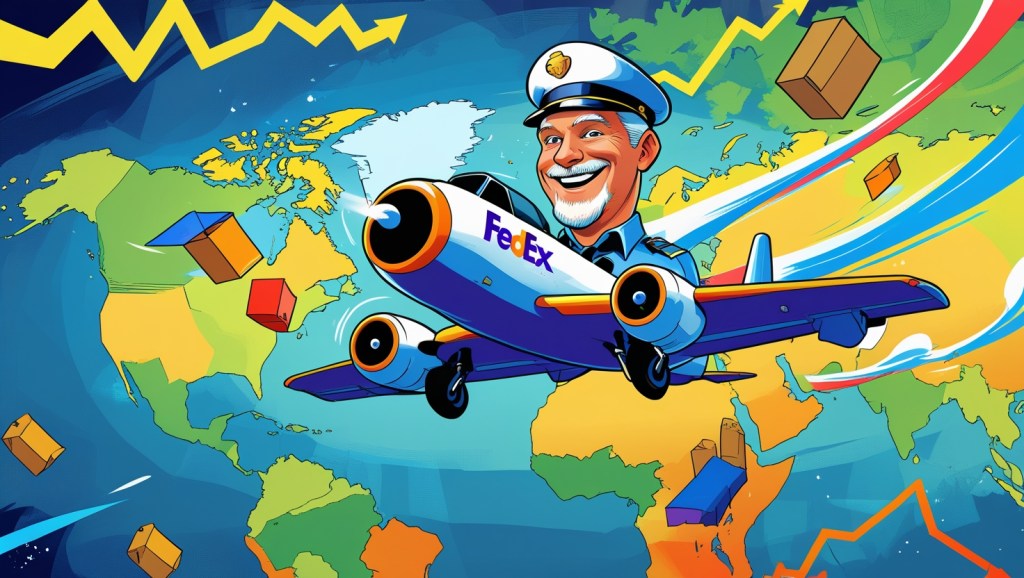
From Vietnam to Global Logistics
In the world of modern logistics, few names carry the weight and legacy of Fred Smith, the founder of FedEx. Born in 1944, Smith’s early experiences as a Marine in the Vietnam War shaped not just his character, but his vision for a future where speed, reliability, and global infrastructure would define commerce.
What started as a bold idea in a Yale term paper turned into a global giant worth billions. Yet Fred Smith was not just building a delivery service. He was reshaping the infrastructure of capitalism.
The Birth of FedEx: Betting Big on Speed
In 1971, Smith took a massive gamble. With a $4 million inheritance and $91 million in venture capital, he launched Federal Express. The idea? An overnight delivery network with its own planes, hubs, and a laser focus on time-sensitive deliveries.
It was insane for the time. Most analysts called it a guaranteed failure. But Smith believed that as the economy globalized, the value of time would skyrocket. And he was right. FedEx’s hub-and-spoke model became a blueprint for modern logistics.
By the early 1980s, FedEx was delivering over 60,000 packages a night. Today, that number is over 16 million.
Innovating at the Edge of Technology
Smith didn’t just build FedEx on logistics — he built it on technology and foresight. FedEx was one of the first companies to:
- Use real-time package tracking
- Equip delivery trucks with mobile data terminals
- Implement digital signatures and barcode scanning long before it became standard
His mindset was clear: FedEx was a tech company that happened to move packages.
This culture of innovation is what allowed FedEx to stay ahead of Amazon, DHL, and UPS in several markets even as global delivery competition intensified.
Fred Smith’s Exit and FedEx in 2025
Smith stepped down as CEO in 2022, handing the reins to Raj Subramaniam. But his influence still lingers.
FedEx is now adapting to a world of autonomous delivery, AI logistics optimization, and carbon-neutral shipping goals. It faces stiff competition from Amazon’s internal logistics and startups that offer ultra-fast urban deliveries.
But the empire that Smith built is resilient — a product of a man who saw the future decades in advance.
What Entrepreneurs Can Learn from Fred Smith
“The information about the package is as important as the package itself.” — Fred Smith
Smith’s story is more than a business case. It’s a manifesto for vision-driven entrepreneurship:
- Believe in timing: He bet on overnight delivery when few believed in it.
- Own the infrastructure: Like Musk today, Smith knew control meant resilience.
- Don’t wait for the market — build it.
FedEx wasn’t inevitable. It was forged by vision, war-hardened discipline, and a willingness to risk everything on an idea.
Conclusion: The Legacy of a Logistics Rebel
Fred Smith didn’t just create a company. He reinvented how goods move, how time is valued, and how technology can give form to bold ideas.
In a world that increasingly values speed and control, his philosophy still delivers.
Want more deep dives like this? Subscribe to our newsletter and follow our [Trends Watch 2025] series for weekly analysis on tech, finance, and the people shaping the economy.
References
- FedEx, Official History Timeline, 2024.
- Forbes, Fred Smith’s Lasting Impact on Logistics, 2023.
- Harvard Business Review, The Strategy Behind FedEx’s Rise, 2022.
 Smart Money Tech