
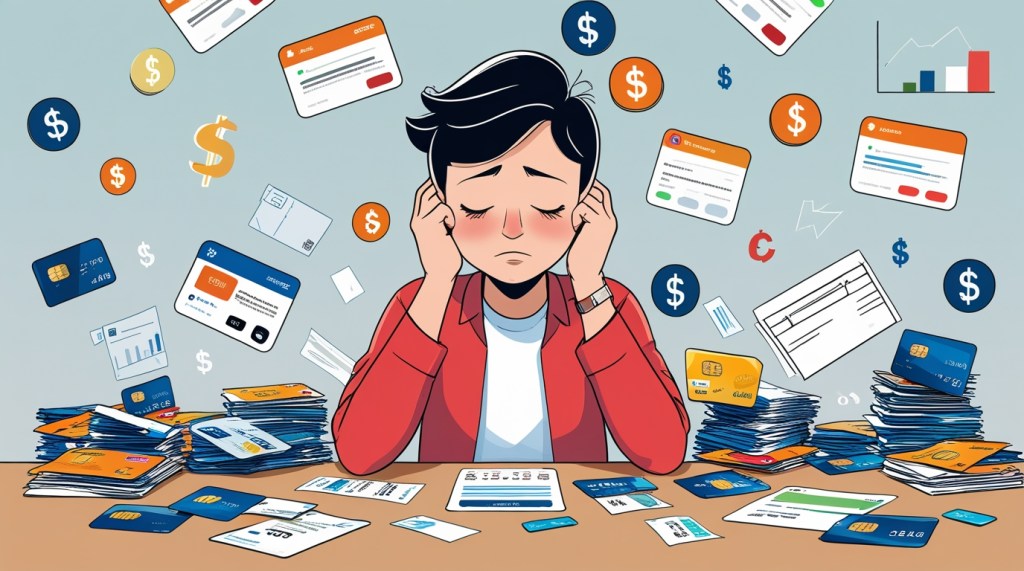
The Hidden Enemy of Smart Money Decisions
In personal finance, most people focus on budgeting, saving, and investing. But there’s a silent factor that shapes nearly every financial outcome: decision fatigue. It’s the mental exhaustion that comes from making too many choices in a day. And in today’s world—filled with endless banks, cards, apps, and investment options—it’s easier than ever to fall into financial traps simply because your brain is tired.
What Is Decision Fatigue in Finance?
Decision fatigue is a psychological phenomenon where the quality of your choices decreases after a long session of decision-making. While it’s been studied in law and healthcare, its impact on money is just as powerful.
Think about it:
- You start your day deciding which coffee subscription to keep.
- At work, you compare investment options for your 401(k).
- In the evening, you’re bombarded with ads for new fintech apps, insurance packages, and “must-have” subscriptions.
By the time you make a financial decision that really matters, your mental energy is already drained.
How It Drains Your Wallet
The consequences of decision fatigue often appear in subtle but expensive ways:
- Impulse purchases: choosing the quick dopamine hit over long-term savings.
- Overpaying for convenience: accepting high fees or overpriced services because it’s easier.
- Procrastination: delaying investments or debt payments, which leads to lost opportunities.
- Fragmented systems: juggling too many accounts, apps, and cards, which makes financial tracking harder and less effective.
In the long run, these small errors compound—just like interest does.
Real-Life Examples
- A professional with six credit cards who keeps missing due dates simply because of the mental load.
- A student who downloads every budgeting app, but never sticks to one, wasting time and often missing key savings.
- A family paying for five different streaming services they barely use, because “canceling later” always gets postponed.
How to Beat Financial Decision Fatigue
The goal isn’t to eliminate decisions—it’s to simplify them. Here’s how:
- Automate Where Possible
- Set automatic transfers to savings or investments.
- Automate bill payments for recurring expenses.
- Reduce Options
- Stick to one or two bank accounts instead of many.
- Use a single budgeting app consistently instead of chasing the newest tool.
- Apply Simple Rules
- The 30-day rule: wait 30 days before big purchases.
- The one-in-one-out rule: for every subscription you add, cancel another.
- Schedule Financial Check-Ins
- Instead of deciding daily, review your finances weekly or monthly.
- This reduces the micro-decisions that clutter your mind.
- Invest in Knowledge, Not Noise
- Focus on timeless personal finance books like Rich Dad Poor Dad or The Intelligent Investor.
- Avoid being swayed by every trending TikTok finance tip.
Why This Matters for Wealth Building
Every wasted dollar has an opportunity cost. If $100 slips away each month because of decision fatigue, that’s $1,200 a year—or over $15,000 in a decade if invested in a simple index fund. Simplifying your financial life doesn’t just save time—it builds wealth.
Conclusion: Less Choice, More Clarity
The modern world sells us unlimited options, but financial freedom comes from fewer, smarter choices. By recognizing decision fatigue and reducing unnecessary options, you give yourself the mental clarity to focus on what really matters: growing wealth and living stress-free.
 Smart Money Tech