The “Almost Magical” Quarter — With Cracks Showing
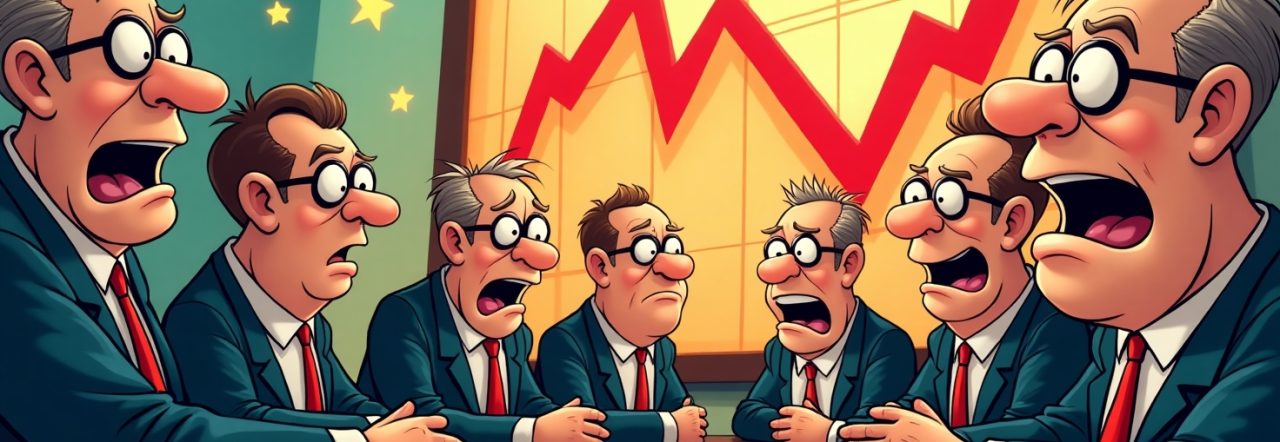
Disney’s latest earnings report delivered a familiar mix of optimism and concern — the kind of quarter that looks good in headlines but reveals deeper structural challenges when examined closely.
For Q4, Disney beat profit expectations thanks to stronger-than-expected performance in streaming and theme parks.
But revenue came in below Wall Street forecasts, dragged down once again by the decline of linear TV, a business Disney relied on for decades.
This raises a question many analysts are whispering — but few are openly addressing:
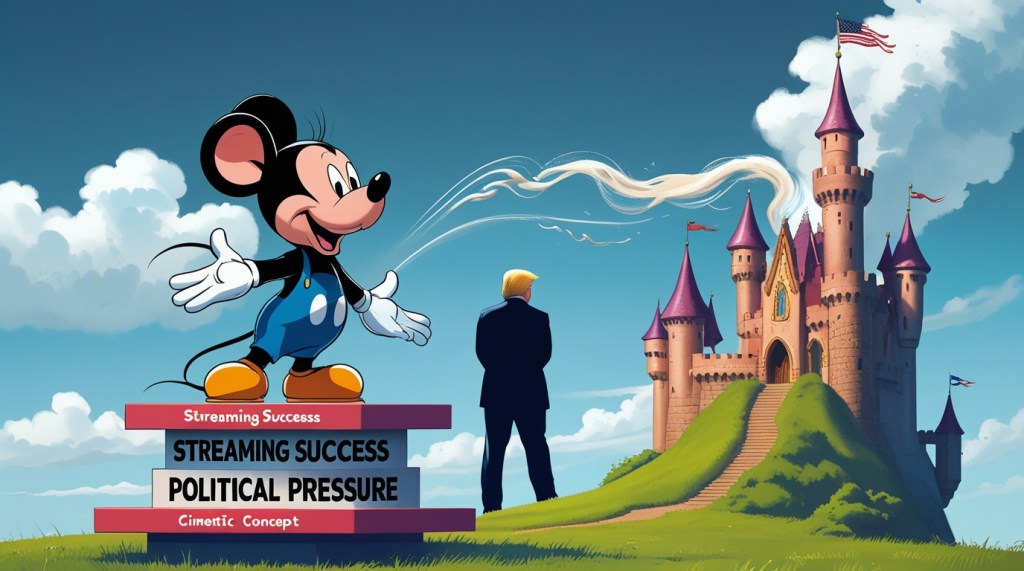
Is Disney’s financial struggle purely market-driven, or are the political pressures surrounding the company beginning to hit the bottom line?
Streaming Saves the Day (Again)
Disney’s direct-to-consumer business, which includes Disney+, Hulu, and ESPN+, finally found its footing.
Subscriber churn slowed, pricing increases stuck, and bundled offers created healthier margins.
Highlights include:
- Higher ARPU (average revenue per user) across the Disney+ platform
- Ongoing reductions in content spending
- Strong ad-supported tier adoption
Disney continues to optimize its streaming machine without the desperate cost-cutting seen in 2023–2024.
But even with these wins, the drag from traditional TV is impossible to ignore.
The Collapse of Linear TV Is Accelerating
Disney’s cable networks — once the company’s golden goose — continue to bleed.
Viewership is down. Advertising is down. Distribution fees are down.
And a critical blow came this quarter from the internal political divide that has reshaped American media consumption.
A growing portion of conservative audiences has abandoned Disney-owned networks, citing “cultural disagreements,” “ideological drift,” or simply preferring alternative platforms.
Meanwhile, content licensing disputes — like the temporary removal of ESPN and ABC from YouTube TV last year — have added instability.
Linear TV isn’t dying slowly anymore. It’s collapsing.
Is Politics Quietly Hitting Disney’s Numbers?
Now comes the uncomfortable part:
Many investors have asked whether Donald Trump’s second presidency and his administration’s policies have indirectly influenced Disney’s performance.
Let’s break down the factors:
1. The DEI Reversal and Political Backlash
The Trump administration’s aggressive stance against DEI (Diversity, Equity & Inclusion) initiatives forced Disney to reverse or soften certain internal policies after facing regulatory pressure and conservative boycotts.
This affected:
- Talent pipelines
- Public perception
- Content creation strategies
- Relations with local governments (ex.: Florida’s Reedy Creek saga)
2. Consumer Polarization
The U.S. is more polarized than ever — and Disney sits at the center of cultural debates.
For many conservative households, Disney has become a symbol of “culture war corporatism.”
This shift affects:
- Park attendance from specific demographics
- TV viewership
- Merchandising
- Subscription preferences
Even a 5–10% consumer shift in a market as large as Disney’s is enough to swing quarterly results.
3. Regulatory Pressures Under Trump
A Trump administration tends to favor:
- Less corporate regulation
- Stronger support for traditional family values
- Crackdowns on federal DEI spending
While lower regulation helps parks and operations, cultural regulatory pressure impacts branding and content decisions — a costly dilemma for a media company whose value depends on storytelling freedom.
Investors React: Is Disney a Political Risk Stock Now?
Investors are quietly reclassifying Disney not only as an entertainment stock but as a politically sensitive asset, similar to:
- Meta (privacy regulation)
- TikTok (national security)
- Exxon (environmental policy shifts)
Disney is at the crossroads of:
- government interests
- public sentiment
- and cultural identity
This creates an unusual headwind: revenue tied to politics more than to performance.
The Path Forward: Can The Magic Return?
Disney has the tools to rebuild — strong IP, a recovering streaming ecosystem, physical assets that print cash, and unrivaled brand recognition.
But the company must answer a critical strategic question:
Will it keep walking into the political battlefield, or will it reposition itself as a neutral entertainment powerhouse again?
If not, the brand will remain vulnerable — not because of content, but because of polarization.
Conclusion:
Disney’s Q4 results prove the company is still a global powerhouse — but also a cultural lightning rod.
Streaming is finally stabilizing. Parks are profitable. But traditional TV is dragging the entire enterprise down.
And behind those numbers lies a more complicated truth:
Politics is now part of Disney’s financial equation.
Whether driven by cultural backlash or regulatory pressure, the political environment under Trump is shaping how the company must operate — and how investors must evaluate it.
If Disney wants to restore its magic, it must first rebuild trust across a divided America.
References
- Investopedia, Disney Tops Profit Estimates but Revenue Falls Short, 2025.
- Reuters, Disney Boosts Dividend and Buyback as Streaming and Parks Drive Profit, 2025.
- NY Post, Disney Reverses DEI Warning Language After Trump Crackdown, 2025.
- CNBC, Disney Earnings Breakdown, 2025.
 Smart Money Tech