
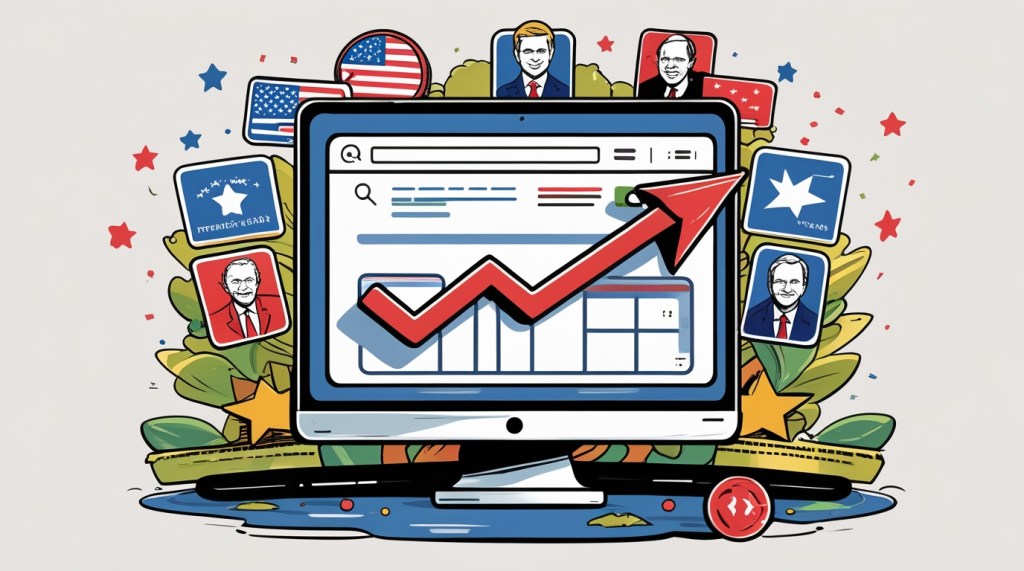
The Search Spike Says More About the Internet Than About Politics
When the term “Barron Trump” suddenly climbs into the top search trends in the United States, the assumption is that a major political event has taken place.
Yet, in most cases, these spikes reflect something very different: algorithmic amplification, not meaningful news.
The recent surge in searches is not tied to a specific political action or event, but to a predictable digital pattern that intensifies during U.S. election cycles.
Understanding why this happens offers valuable insight into how technology shapes public perception — often without context and without intent.
The Algorithmic Mechanics Behind Political Search Waves
Every election cycle produces the same digital behavior: any name associated with a prominent political figure — directly or indirectly — tends to trend, regardless of relevance.
The phenomenon can be explained through three core mechanisms:
1. Algorithmic association
Search engines and social platforms relate terms based on semantic proximity.
When a political figure dominates the news cycle, associated names — even those not involved in public life — can surface in suggestions and trending panels.
2. Context-free viral curiosity
Trends frequently arise from:
- memes
- commentary without context
- short-form videos
- reposted clips on X, TikTok, or YouTube
A single viral moment can generate nationwide search interest, despite the absence of real-world news.
3. Election-season amplification
During election periods, public curiosity intensifies.
Users search more broadly for anything connected to political families, not because of events, but because of heightened national attention.
In effect, the trend reflects public behavior, not political developments.
What This Reveals About Tech Platforms
These spikes demonstrate several vulnerabilities within the digital ecosystem:
• Unintentional amplification
Algorithms prioritize volume, not accuracy or public relevance.
• Blurring of information value
Trending pages do not differentiate between:
- serious news
- speculative attention
- viral content
- harmless curiosity
Everything is presented through the same interface.
• Feedback loops across media
Once a name trends, media outlets and automated content aggregators highlight it, reinforcing the cycle and creating the illusion of significance.
This is a structural feature of digital platforms, not an isolated incident.
Why This Matters to Investors and the Tech Industry
Political search trends have real implications in finance and technology.
1. They influence ad markets
Spikes in politically adjacent terms increase:
- bidding prices in search advertising
- traffic for media companies
- engagement metrics on social networks
Platforms like Google, Meta, and X benefit financially from heightened political attention.
2. They reveal consumer behavior patterns
Understanding how and why people search helps:
- advertisers allocate budgets
- media companies plan coverage
- big tech forecast engagement cycles
Election-driven attention is one of the most predictable and monetizable patterns on the internet.
3. They show the limits of algorithmic transparency
Users rarely know why something trends — and platforms rarely explain it.
For analysts, this opacity is essential to monitor.
The Ethical Dimension
Trends involving individuals not tied to public roles reveal a recurring problem:
algorithms do not distinguish between public interest and viral curiosity.
This raises questions for platforms:
- Should trending systems add context automatically?
- Should they filter out non-public figures in political cycles?
- How can platforms reduce misinterpretation?
These are open questions for policymakers and tech governance experts.
Conclusion
The spike in searches for “Barron Trump” is not a political event — it is a digital behavior event.
It reflects how algorithms group related names, how voters consume content, and how election cycles heighten nationwide attention.
More importantly, it highlights a broader truth about the modern internet:
in the age of algorithms, attention is manufactured, not discovered.
For the tech sector, advertisers, media analysts, and investors, understanding these patterns is essential.
For the public, it is a reminder that trending content often reflects curiosity — not reality.
 Smart Money Tech