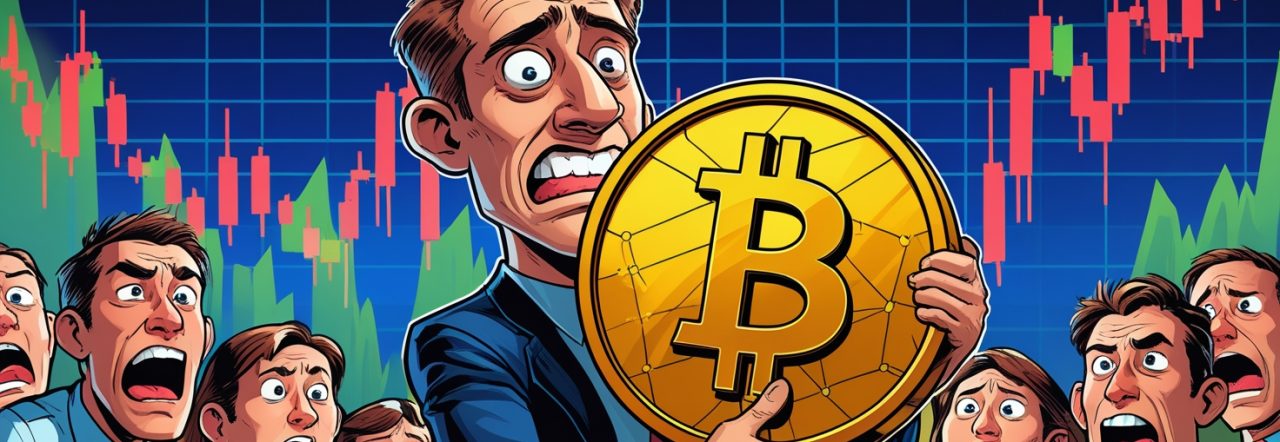

“Why is the stock market down today?”
It’s one of the most searched financial questions on the internet — and not because the answer is usually clear. In 2026, this question has become less about finding a specific cause and more about trying to make sense of a market that feels permanently unstable.
What’s interesting isn’t the daily drop itself.
It’s how often people feel the need to ask this question.
Markets No Longer Move on Big Events — They Move on Expectations
There was a time when market drops were tied to obvious shocks: recessions, wars, financial crises. Today, markets often fall without a single defining event.
A slight change in earnings guidance.
A shift in interest rate expectations.
A sentence in a central bank speech.
Markets don’t wait for confirmation anymore. They move on anticipation.
In 2026, prices reflect what investors think might happen next, not what is happening now. That makes daily moves harder to interpret — and easier to misread.
Volatility Has Become the Baseline
What used to feel like turbulence now feels normal.
Algorithmic trading, passive funds, and real-time data distribution have compressed reaction time. Information travels instantly, and positioning changes just as fast. As a result, small signals can trigger outsized moves.
The market isn’t necessarily more fragile.
It’s more sensitive.
That sensitivity creates frequent declines that feel alarming but often lack long-term meaning.
Why Bad Days Feel Louder Than Good Ones
Psychology plays a quiet but powerful role.
Losses capture attention more than gains. A 1% drop feels heavier than a 1% rise feels rewarding. When markets are already uncertain, every red day reinforces the feeling that something is “wrong,” even when broader trends remain intact.
This is why the question keeps returning:
Why is the market down today?
It’s not just about money.
It’s about reassurance.
The Gap Between Markets and Daily Life
Another reason this question dominates search trends is the disconnect between market behavior and personal experience.
Markets may swing sharply, while:
- Jobs remain stable
- Inflation moves slowly
- Daily expenses change little overnight
When prices move faster than real life, confusion grows. Investors try to map market drops onto their own reality — and often can’t.
That gap fuels anxiety more than losses themselves.
What This Says About 2026
This recurring question reveals something deeper about the current financial environment.
2026 is not defined by constant crisis.
It’s defined by constant uncertainty.
Markets are adjusting to:
- Higher-for-longer interest rates
- Slower but uneven growth
- Heavy dependence on expectations rather than outcomes
In that environment, small disappointments matter more than big successes. Confidence is fragile, even when fundamentals aren’t broken.
Conclusion: The Question Matters More Than the Answer
Most days, there is no single reason the market is down.
And that’s the point.
The fact that so many people ask this question tells us more than any daily headline ever could. It reflects a market driven by expectations, psychology, and speed — not just by economic reality.
In 2026, understanding markets isn’t about reacting to every dip.
It’s about recognizing when movement is noise — and when it’s a signal.
The hardest part isn’t finding answers.
It’s learning which questions actually deserve them.
References
- Federal Reserve, Monetary Policy and Market Expectations, 2025–2026.
- Federal Reserve Bank of New York, Financial Market Volatility and Risk Sentiment, 2026.
- Bloomberg, Why Markets Move on Expectations, Not Events, 2025.
- Reuters, Global Markets: Volatility, Rates, and Investor Positioning, 2026.
- Investopedia, Why Markets Move Before News Becomes Reality, updated edition.
 Smart Money Tech