

U.S.–Iran Tensions Rise: Why Oil Prices React Before Politicians Do


Oil does not wait for speeches.

When tensions rise between the United States and Iran, markets tend to react before diplomats do, before official statements settle, and often before the public fully understands what is changing. That is exactly what has happened in March 2026. Reuters reported on March 12 that oil surged more than 6% after Iran intensified attacks on Gulf shipping and fears grew over supply disruptions through the Strait of Hormuz. Brent climbed near $98 and briefly touched $100, while WTI moved above $92. 

That reaction may look dramatic, but it follows a familiar logic. Oil prices are not only about barrels already lost. They are about the risk that supply could become harder, slower, or more expensive to move.


Why Oil Moves First

Energy traders do not wait for certainty. They price probability.

That is why markets often respond to attacks, tanker disruptions, and threats to shipping routes long before politicians settle on language like “de-escalation,” “containment,” or “response.” Reuters reported that renewed attacks on tankers in the Gulf shattered hopes of a quick calming of the conflict, pushed oil above $100 at one point, and reignited inflation concerns across global markets. 

In other words, oil is reacting to what might happen next, not just to what has already happened.

That distinction matters. Financial markets can tolerate uncertainty for a while. Physical commodity markets are less patient. If traders believe shipping lanes are at risk, insurers hesitate, freight costs rise, and buyers start paying for protection immediately. Reuters also reported that Goldman Sachs raised its oil forecasts because it now expects a longer disruption in Hormuz flows than previously assumed. 


The Strait of Hormuz Is the Real Pressure Point

The reason this story matters so much is geography.

The U.S. Energy Information Administration identifies the Strait of Hormuz as one of the world’s most important oil transit chokepoints. In its current outlook, the EIA says nearly 20% of global oil supply flows through Hormuz, and that threats of attack have already led many tankers to avoid the route, contributing to production shut-ins in the region. 

That is why even a limited military escalation can move prices so quickly. The market does not need a total closure of Hormuz to panic. It only needs enough friction to believe normal flows are no longer reliable.

This is also why oil often reacts faster than equities. Stocks can still tell themselves a conflict is temporary. Oil has to price the logistical reality now.


Why the Market Cares Even Before Consumers Do

At first, this can feel disconnected from everyday life. Most people do not see Brent futures on a gas station sign.

But oil shocks rarely stay inside energy markets. They leak outward.

Reuters reported this week that the latest U.S. inflation reading reflected February conditions before the Iran-driven oil spike, which means the newest surge in crude has not yet fully shown up in headline inflation data. That is important because it suggests the real consumer impact may still be ahead, not behind. 

Higher crude prices can eventually affect gasoline, freight, airline costs, manufacturing inputs, and food distribution. The effect is not always immediate, but it tends to spread. That is why oil markets feel geopolitical stress sooner than households do: they are pricing tomorrow’s cost structure today.


This Also Complicates the Fed

The Federal Reserve does not set oil prices, but oil can make the Fed’s job harder.

Reuters reported earlier this month that the conflict involving Iran had already pushed market expectations for the next Fed rate cut further out, because higher energy prices create fresh inflation risk even if the U.S. economy itself remains relatively resilient to oil shocks. 

That creates an uncomfortable tension.

If oil rises sharply, inflation risks stay alive. But if conflict also slows confidence and investment, growth risks rise too. That is not a clean macroeconomic story. It is exactly the kind of environment central bankers dislike: one where price pressure and uncertainty move together.

So when oil reacts before politicians, it is not just a headline issue. It becomes a monetary policy issue as well.


Markets Are Pricing Risk, Not Just Reality

One of the easiest mistakes in moments like this is to assume that higher oil means markets know exactly what comes next.

They do not.

What they know is that risk has become more expensive.

Reuters reported that Iran warned of continued strikes and publicly floated the possibility of oil reaching $200 a barrel if shipping disruptions intensify. That does not mean oil is going to $200. It means the market now has to account for scenarios that would have sounded extreme only weeks ago. 

This is where commodity markets differ from political messaging. Politicians can try to calm. Markets have to hedge.


Conclusion

Oil reacts before politicians because oil has less room for delay.

Diplomacy can wait for language. Markets cannot wait for logistics. In March 2026, the rise in U.S.–Iran tensions has once again shown how quickly crude prices absorb fear, reroute expectations, and start reshaping the economic conversation before any official strategy is fully formed. Reuters, Goldman Sachs, and the EIA all point to the same basic reality: the market is not only watching the conflict itself, but the vulnerability of the routes that keep energy moving. 

The bigger question is not whether oil can spike on conflict. History has answered that already.

The real question is how long a market can keep pricing geopolitical risk before it starts becoming everyday inflation.


References

  • ReutersOil jumps 6% as Iran escalates attacks on Gulf shipping, 2026.
  • ReutersGlobal markets: shares skid as attacks on Gulf shipping lift oil and inflation concerns, 2026.
  • ReutersGoldman Sachs raises oil price forecast amid longer Hormuz disruption, 2026.
  • ReutersGoldman Sachs delays Fed rate-cut call as Middle East war lifts inflation risks, 2026.
  • ReutersU.S. consumer inflation steady before Iran conflict drives up oil prices, 2026.
  • U.S. Energy Information AdministrationWorld Oil Transit Chokepoints, updated resource.
  • U.S. Energy Information AdministrationShort-Term Energy Outlook, March 2026.
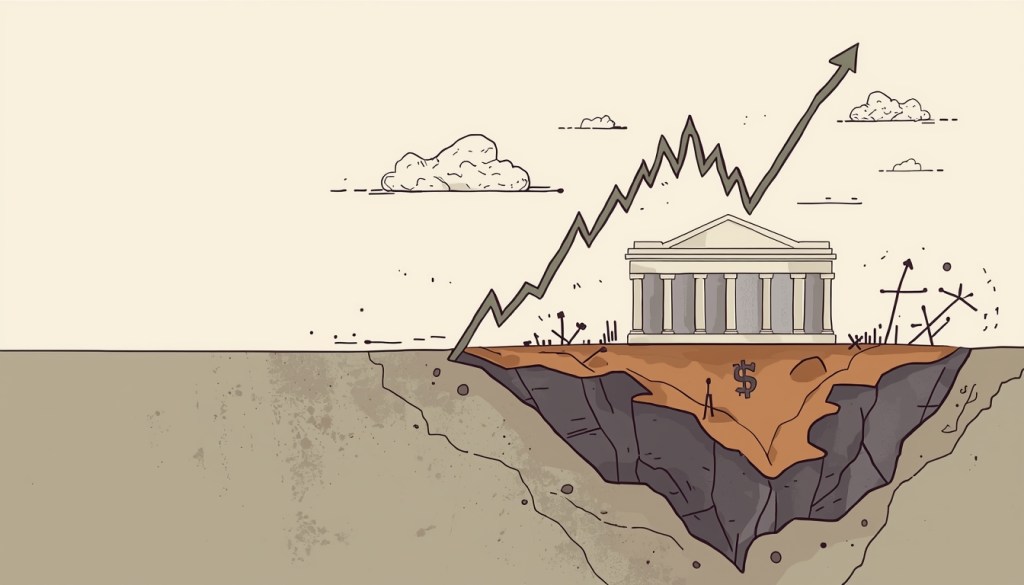
Is Retirement Becoming a Luxury in America?


For decades, retirement in America followed a familiar script.

Work hard. Contribute to Social Security. Pay into Medicare. Build a 401(k). Then, step into a slower chapter of life — ideally in the same country where you spent your career.

But in 2026, that script feels less certain.

With the average Social Security benefit hovering around $1,900 per month, many retirees are discovering that maintaining a middle-class lifestyle inside the United States is more complicated than expected.

The question isn’t whether America is collapsing.

It’s whether retirement is quietly becoming unaffordable for a growing segment of the population.


When Fixed Income Meets Rising Costs

Retirement income is typically fixed or semi-fixed:

  • Social Security
  • Pension income (for some)
  • Withdrawals from 401(k) or IRA accounts

But expenses are not fixed.

Housing costs remain elevated in many states. According to recent U.S. housing data, median rents and property taxes in metropolitan areas often exceed what a $1,900 monthly check can comfortably support.

Healthcare adds another layer. Even with Medicare, retirees face:

  • Supplemental insurance premiums
  • Out-of-pocket prescription costs
  • Long-term care expenses

According to estimates from the Kaiser Family Foundation (2025–2026 reports), the average retiree can expect significant lifetime healthcare spending beyond Medicare coverage.

When income is predictable but expenses are not, pressure builds.


The Rise of “Geo-Arbitrage Retirement”

A growing number of Americans are responding with a strategy sometimes called geo-arbitrage retirement.

The math is simple:

If $1,900 per month feels tight in California or Florida, it may stretch further in Mexico, Portugal, or parts of Southern Europe.

According to the U.S. Social Security Administration, approximately 760,000 beneficiaries receive Social Security payments outside the United States.

The most common destinations include:

  • Canada
  • Mexico
  • Japan
  • Germany
  • United Kingdom

Mexico and Portugal have become particularly attractive due to lower housing costs and residency programs geared toward retirees.

This isn’t necessarily a political decision.
It’s often financial optimization.


Inflation and the Silent Erosion of Purchasing Power

Inflation doesn’t need to spike dramatically to change retirement math.

Even moderate, persistent inflation can erode fixed incomes over time.

Social Security benefits are adjusted through cost-of-living adjustments (COLA), but healthcare and housing costs often rise faster than headline inflation.

Over a 10–15 year retirement horizon, small gaps compound.

Structural inflation — particularly in services like healthcare and housing — disproportionately affects retirees because these categories dominate their spending.


The Fiscal Dimension: When Benefits Leave the Country

There’s also a broader economic dimension.

When Social Security payments are spent abroad, that money no longer circulates directly within U.S. local economies.

While the total amount is small relative to overall GDP, it reflects something symbolic:

Retirement income earned in America is sometimes more sustainable outside of it.

This does not signal systemic failure. The U.S. remains one of the strongest economies globally.

But it does raise a structural question about domestic cost levels relative to fixed retirement income.


What This Says About the Cost Structure of America

The United States offers opportunity, scale, and economic dynamism.

But it also carries:

  • High healthcare costs
  • Elevated housing prices in many regions
  • Rising insurance and property tax burdens
  • Increasing fiscal pressure as federal debt grows

According to the U.S. Treasury Department (2026 fiscal data) and projections from the Congressional Budget Office, federal debt servicing costs continue to rise alongside interest rates.

That doesn’t automatically translate into retirement instability. But it does create long-term uncertainty around taxation and entitlement sustainability.

Retirees tend to react early to uncertainty — not after it materializes.


Is Retirement a Choice — or a Calculation?

For some Americans, retiring abroad is aspirational. Cultural exploration, slower pace of life, new experiences.

For others, it’s arithmetic.

When fixed income meets rising structural costs, geography becomes a variable.

Retirement, once considered a predictable reward for decades of work, now requires strategy.

The uncomfortable question may not be whether America is unaffordable.

It may be whether future retirees will need to think internationally — even if they never planned to.


References

  • U.S. Social Security AdministrationBeneficiaries Abroad Report, 2026.
  • Kaiser Family FoundationMedicare and Retiree Healthcare Spending Reports, 2025–2026.
  • U.S. Treasury DepartmentFederal Debt and Fiscal Data, 2026.
  • Congressional Budget Office (CBO)Long-Term Budget Outlook, 2026.
  • International LivingGlobal Retirement Index, 2026.

Is the Market Sliding Into a Crisis — Or Just Facing Reality in 2026?


The market has been falling again.

Tech stocks are volatile. AI names are under pressure. Headlines feel heavier. And the same question keeps resurfacing:

Are we entering a crisis?

It’s a fair question. But before jumping to conclusions, it helps to define what a crisis actually looks like — and whether today’s market fits that description.


What a Real Crisis Looks Like

Historically, financial crises share certain traits.

In 2008, credit markets froze. Major banks collapsed. Liquidity evaporated. The Federal Reserve intervened aggressively to prevent systemic failure.

In early 2020, markets plunged amid sudden global shutdowns. Economic activity stalled almost overnight. Emergency monetary stimulus followed immediately.

Crises typically involve:

  • A breakdown in credit markets
  • Rapid unemployment spikes
  • Forced deleveraging
  • Central bank emergency action
  • Structural instability in the financial system

The key element is systemic stress — not just falling stock prices.


What We’re Seeing Now

In early 2026, markets are undeniably volatile. Growth stocks are being repriced. AI-related companies are facing more scrutiny. Forward guidance is moving stocks more than past results.

But the broader financial system does not currently show classic signs of distress.

According to recent reporting from Reuters, Global Markets Coverage (February 2026), equity volatility has increased, particularly in technology sectors, but credit markets remain functional and liquidity conditions stable.

Spreads in corporate bond markets — while fluctuating — have not widened in a way that signals systemic panic. The Federal Reserve has not signaled emergency intervention. Banking stress indicators remain contained.

What we are seeing looks more like adjustment than collapse.


The Role of Interest Rates and AI Expectations

Two forces are shaping market behavior in 2026:

1️⃣ Higher-for-Longer Interest Rates

While rate cuts are widely discussed, policy rates remain elevated compared to the ultra-low environment of the 2010s. Higher capital costs naturally pressure high-growth stocks and long-duration assets.

According to the Federal Reserve’s Monetary Policy Reports (2025–2026), policymakers remain cautious about premature easing, emphasizing inflation management and labor market resilience.

2️⃣ AI Recalibration

The AI rally of the past two years expanded valuations quickly. Now investors are shifting from enthusiasm to evaluation. Markets are demanding proof of sustainable profitability rather than future promises.

As noted in Bloomberg Intelligence, AI Investment Outlook 2026, capital expenditures in AI infrastructure remain historically high, increasing pressure on margins and execution.

Neither of these dynamics automatically signals crisis. They signal maturity.


The Quiet Risk Beneath the Surface

That said, complacency would also be misguided.

There are legitimate risks in the current environment:

  • Elevated corporate debt levels
  • Slower global growth
  • Geopolitical uncertainty
  • Persistent fiscal deficits

According to analysis from JPMorgan Global Strategy (2026 Outlook Report), markets are entering a phase where resilience depends heavily on earnings stability and disciplined capital allocation.

This is not systemic breakdown. But it is a more fragile equilibrium.

Markets can transition from adjustment to stress if multiple pressures converge. That hasn’t happened — but it remains a possibility in any late-cycle environment.


What the Market Itself Is Signaling

Markets tend to price expectations before outcomes.

Current volatility suggests investors are reassessing optimism — not fleeing the system. Risk appetite has narrowed, not disappeared.

Defensive sectors have gained relative strength. Bond demand remains steady. Liquidity is present.

These signals point toward caution, not collapse.


Conclusion: Crisis — or the End of Easy Gains?

It may not be accurate to say we are entering a crisis.

But it may be accurate to say we are exiting an era of effortless momentum.

The past few years rewarded narrative, growth projections, and capital expansion. The current phase appears to reward discipline, profitability, and balance sheet strength.

Markets feel uncomfortable not because they are breaking — but because they are adjusting.

The more difficult question may not be whether we are in a crisis.

It may be whether investors are prepared for a market that no longer rises simply because expectations are optimistic.

In 2026, volatility may not signal collapse.

It may signal accountability.


References

  • Reuters, Global Markets Coverage: Volatility rises in tech as investors reassess growth outlook, February 2026.
  • Federal Reserve, Monetary Policy Report, 2025–2026.
  • Bloomberg Intelligence, AI Investment and Capital Expenditure Outlook 2026, 2026.
  • JPMorgan, Global Strategy Outlook 2026, 2026.
  • Federal Reserve Bank of New York, Financial Stability Indicators Report, 2026.

AI Stocks Are Being Tested — Is the Hype Fading in 2026?


For the past two years, artificial intelligence has been the most powerful narrative in financial markets.

Mention AI on an earnings call, and stock prices reacted. Announce AI integration, and valuations expanded. Chipmakers, cloud providers, enterprise software firms — all benefited from what many called the next industrial revolution.

But in early 2026, something feels different.

AI stocks are no longer rising automatically. They’re being tested.

The question isn’t whether artificial intelligence still matters.

It’s whether markets are done rewarding potential — and ready to demand proof.


The Market Is Becoming More Selective

In 2023 and 2024, AI optimism lifted nearly every company associated with the theme. Hardware manufacturers, infrastructure providers, data center operators, cybersecurity firms — the enthusiasm spread widely.

Now, that enthusiasm is narrowing.

Recent earnings reactions show a pattern: companies delivering measurable revenue tied to AI investments are being rewarded. Companies offering broad AI narratives without clear monetization are facing volatility.

According to Reuters, Technology Earnings Coverage (February 2026), investor reactions have become more differentiated across AI-linked stocks, particularly in semiconductor and enterprise software sectors.

The market isn’t abandoning AI.

It’s filtering it.


Investors Want Profitability, Not Just Positioning

During peak hype cycles, positioning is often enough. Being “in the right space” attracts capital.

But as capital costs remain higher than in the zero-rate era, investors are increasingly focused on:

  • Free cash flow
  • Capital expenditures
  • Return on invested capital
  • Sustainable margins

Artificial intelligence is expensive. Data centers require massive infrastructure. Training large models consumes energy and computing power. Partnerships require ongoing investment.

As noted in Bloomberg Intelligence, AI Investment Outlook 2026, capital expenditures across major tech firms remain elevated as companies compete in AI development.

The race is real.

But so are the costs.


Guidance Now Moves Markets More Than Headlines

In the current earnings season, forward guidance has become the main driver of price movement.

It’s no longer enough to beat last quarter’s expectations. Markets are asking:

  • How fast is AI revenue scaling?
  • Are AI products replacing existing revenue or expanding it?
  • Will margins expand or compress over time?

According to Investor’s Business Daily, Market Trend Report (February 2026), several tech stocks experienced significant swings not because of past results, but because of revised forward projections tied to AI growth assumptions.

That shift reflects maturity.

Markets are transitioning from excitement to evaluation.


Why This Matters for Retail Investors

For individual investors, AI volatility can feel confusing.

When a stock drops despite strong headlines, it appears contradictory. But in reality, price movements increasingly reflect future expectations rather than present achievements.

Retail investors often enter during momentum phases — when narratives feel strongest. The testing phase, however, is where differentiation occurs.

Some companies will turn AI into durable profit engines.

Others will discover that integration is more complex than projected.

Understanding that distinction requires patience, not just enthusiasm.


Is the Hype Fading — or Just Evolving?

It’s tempting to interpret selective pullbacks as fading hype. But that may be too simplistic.

The AI cycle is likely shifting from:

Promise → Deployment → Measurement

Early optimism rewarded vision. The current phase rewards execution.

Artificial intelligence isn’t disappearing from markets. It’s becoming operational — and that changes how investors value it.


Conclusion: The Real Test Begins Now

In 2026, AI is no longer a futuristic concept. It’s a line item in corporate budgets.

The market is adjusting accordingly.

This isn’t necessarily the end of enthusiasm. It may simply be the beginning of discipline.

The companies that convert AI infrastructure into sustainable earnings will define the next phase of growth. The rest may fade quietly from the spotlight.

The hype may not be fading.

It may just be facing its first real audit.


References

  • Reuters, Technology earnings show selective investor reaction to AI-linked stocks, February 2026.
  • Bloomberg Intelligence, AI Investment and Capital Expenditure Outlook 2026, 2026.
  • Investor’s Business Daily, Market Trend Report: Earnings and AI Positioning, February 2026.
  • Federal Reserve, Interest Rate Policy and Equity Valuation Sensitivity, 2025–2026.
  • McKinsey Global Institute, The Economic Potential of Generative AI, updated analysis.

The Bond Demand Paradox: Why Investors Are Flocking to Debt in an Uncertain Market


At first glance, it doesn’t make sense.

Equity markets are volatile. Tech stocks are recalibrating. AI enthusiasm is being questioned. And yet — demand for bonds remains remarkably strong.

Not just government bonds. Corporate bonds. Even lower-rated debt.

In a year defined by uncertainty, investors aren’t running from risk. They’re redefining it.


When “Safe” Becomes Attractive Again

After years of near-zero interest rates in the early 2020s, bonds were often dismissed as boring or unproductive. Yields were too low to compete with equities.

That changed.

With interest rates remaining elevated compared to pre-2022 levels, bonds once again offer something investors haven’t seen in years: meaningful income.

According to recent coverage from The Wall Street Journal (February 2026), investor appetite for corporate bonds remains strong, with even riskier borrowers able to access funding at relatively favorable spreads.

This is not fear-driven behavior.
It’s yield-driven behavior.


The Return of Fixed Income as Strategy

In uncertain markets, predictability has value.

Bonds offer:

  • Defined income streams
  • Clear maturity timelines
  • Lower volatility compared to equities

Even if yields are no longer rising, the current rate environment allows investors to lock in income levels that feel structurally attractive.

Recent data from the Federal Reserve’s interest rate releases (2026) shows policy rates remaining relatively elevated compared to historical averages of the 2010s. That environment reshapes asset allocation decisions across portfolios.

For many investors, bonds are no longer defensive.
They’re strategic.


Why Even Riskier Borrowers Are Benefiting

One of the most interesting developments this year is that demand isn’t limited to high-grade issuers.

Corporate borrowers with weaker credit profiles are also accessing capital, reflecting strong liquidity conditions and investor willingness to accept moderate credit risk in exchange for higher yields.

Reuters market reports (February 2026) note tightening credit spreads in several segments of the corporate bond market — a sign that investors believe economic conditions are stable enough to absorb moderate risk.

This doesn’t mean the system is fragile.
It suggests confidence is cautious — not absent.


What This Means for the Broader Economy

When bond markets are active, borrowing remains accessible.

Companies refinance debt. Municipalities fund infrastructure. Governments manage deficits.

Strong demand for bonds can signal:

  • Confidence in economic stability
  • Expectation that inflation remains manageable
  • Belief that central banks are nearing policy equilibrium

At the same time, heavy bond issuance raises a quiet question: how sustainable are debt levels if growth slows?

This is the paradox.

Investors seek stability in bonds.
But widespread borrowing reflects ongoing leverage.


Stocks vs. Bonds: A Psychological Shift

The 2020–2021 era conditioned investors to chase growth. The 2026 environment encourages balance.

When volatility increases in equities — particularly tech — capital often rotates into fixed income not out of panic, but recalibration.

The current moment feels less like a flight to safety and more like a portfolio adjustment.

That distinction matters.


Conclusion: Confidence, Not Fear

The strong demand for bonds in early 2026 doesn’t signal crisis. It signals adaptation.

Investors are adjusting to a world where:

  • Interest rates are structurally higher
  • Growth is uneven but not collapsing
  • Volatility is frequent

In that world, fixed income regains relevance.

The question isn’t why investors are buying bonds.

It’s whether this quiet return to income-focused strategy marks a temporary adjustment — or the beginning of a longer shift in how capital is allocated in a post-zero-rate world.


References

  • The Wall Street JournalThe Demand for Bonds Is Insatiable. Even Risky Borrowers Are Reaping the Benefits, February 2026.
  • ReutersCorporate bond spreads tighten amid steady investor demand, February 2026.
  • Federal ReserveMonetary Policy Report and Interest Rate Data, 2026.
  • BloombergCredit Markets Show Resilience Despite Equity Volatility, 2026.
  • Federal Reserve Bank of New YorkCorporate Debt and Credit Conditions Report, 2026.

Why AI Fears Are Dragging Tech Stocks — Even as Markets Look Stable


For the past year, artificial intelligence has been the engine of market optimism. Earnings calls revolved around AI integration. Chipmakers rallied. Cloud providers expanded. Every major tech narrative seemed to include two letters: A and I.

But in recent days, something shifted.

Even as broader indices show mixed or stable performance, several technology stocks have faced renewed pressure. Investors aren’t abandoning AI — they’re reassessing it.

And that distinction matters.


AI Optimism Built on Expectations, Not Immediate Results

Much of the rally in technology stocks over the past two years has been driven by expectations. The promise of AI-powered productivity gains, cost reductions, and scalable revenue streams fueled valuations across semiconductors, enterprise software, and data infrastructure.

Companies linked to AI — directly or indirectly — benefited from this narrative. The assumption was clear: AI would drive margin expansion and unlock new growth cycles.

But markets don’t reward stories forever. They eventually ask for evidence.

Recent global market reports show tech-heavy sectors facing consolidation, particularly in regions where valuations had stretched quickly. According to Reuters (Global Markets Coverage, February 2026), investor caution has increased in AI-linked equities amid concerns about earnings sustainability and global growth moderation.

This isn’t a collapse. It’s recalibration.


When “AI” Stops Being a Magic Word

During peak enthusiasm, simply mentioning AI in an earnings call could boost sentiment. Now, investors are beginning to differentiate between companies that are integrating AI profitably and those that are merely associating themselves with the trend.

The market is moving from narrative-driven valuation to performance-driven valuation.

According to Investors Business Daily (Market Trend Report, February 2026), recent earnings reactions show a more selective approach from investors. Strong guidance tied to measurable AI monetization is rewarded. Vague positioning is not.

That shift doesn’t signal the end of the AI cycle — but it does signal maturity.


Volatility in Tech Doesn’t Mean Weakness in the Economy

One important detail often missed in these moments: tech stocks can fall even if the broader economy remains stable.

Markets price sectors differently based on sensitivity to expectations. Technology, especially AI-related firms, tends to react more aggressively to small changes in projected growth or interest rate outlooks.

In environments where interest rates remain elevated or uncertain, long-duration growth assets — like many AI-driven tech companies — become more sensitive to adjustments in future earnings projections.

This explains why tech may experience volatility even when other sectors hold steady.


The Psychology Behind AI Pullbacks

There’s also a psychological layer.

AI became synonymous with inevitability. When something feels inevitable, risk appears smaller. But once markets shift into evaluation mode, the same inevitability becomes conditional.

Investors begin asking:

  • How long before AI investments translate into free cash flow?
  • Are capital expenditures sustainable?
  • Is competition compressing future margins?

These are normal questions in any growth cycle. But they feel heavier when expectations have been elevated for months.


What This Says About 2026

If 2023 and 2024 were defined by AI excitement, 2026 may be defined by AI scrutiny.

That doesn’t imply failure. It implies transition.

Markets are moving from:

Belief → Adoption → Measurement.

This phase tends to be noisier, more selective, and less forgiving.

And that shift is healthy.


Conclusion: Fear or Filter?

The current pullback in certain tech stocks may look like fear. But it could also be filtration.

Markets are testing which companies can convert AI from infrastructure spending into durable profitability. That process involves volatility — not collapse.

In 2026, AI is no longer a futuristic promise. It’s an operational reality being judged in real time.

The question isn’t whether AI will shape the economy.

It’s which companies will turn that transformation into sustainable value — and which were riding momentum alone.


References

  • Reuters, Global markets cautious as AI-linked stocks face consolidation, February 2026.
  • Reuters, Indian shares decline as AI concerns weigh on technology sector, February 12, 2026.
  • Investor’s Business Daily, Market Trend Report: Earnings reactions show selective AI positioning, February 2026.
  • Federal Reserve, Interest Rates and Equity Valuation Sensitivity, 2025–2026 analysis.
  • Bloomberg, AI Investment and Profitability Outlook in Public Markets, 2026.

Why Is the Stock Market Down Today? What This Question Really Reveals About 2026


“Why is the stock market down today?”

It’s one of the most searched financial questions on the internet — and not because the answer is usually clear. In 2026, this question has become less about finding a specific cause and more about trying to make sense of a market that feels permanently unstable.

What’s interesting isn’t the daily drop itself.
It’s how often people feel the need to ask this question.


Markets No Longer Move on Big Events — They Move on Expectations

There was a time when market drops were tied to obvious shocks: recessions, wars, financial crises. Today, markets often fall without a single defining event.

A slight change in earnings guidance.
A shift in interest rate expectations.
A sentence in a central bank speech.

Markets don’t wait for confirmation anymore. They move on anticipation.

In 2026, prices reflect what investors think might happen next, not what is happening now. That makes daily moves harder to interpret — and easier to misread.


Volatility Has Become the Baseline

What used to feel like turbulence now feels normal.

Algorithmic trading, passive funds, and real-time data distribution have compressed reaction time. Information travels instantly, and positioning changes just as fast. As a result, small signals can trigger outsized moves.

The market isn’t necessarily more fragile.
It’s more sensitive.

That sensitivity creates frequent declines that feel alarming but often lack long-term meaning.


Why Bad Days Feel Louder Than Good Ones

Psychology plays a quiet but powerful role.

Losses capture attention more than gains. A 1% drop feels heavier than a 1% rise feels rewarding. When markets are already uncertain, every red day reinforces the feeling that something is “wrong,” even when broader trends remain intact.

This is why the question keeps returning:

Why is the market down today?

It’s not just about money.
It’s about reassurance.


The Gap Between Markets and Daily Life

Another reason this question dominates search trends is the disconnect between market behavior and personal experience.

Markets may swing sharply, while:

  • Jobs remain stable
  • Inflation moves slowly
  • Daily expenses change little overnight

When prices move faster than real life, confusion grows. Investors try to map market drops onto their own reality — and often can’t.

That gap fuels anxiety more than losses themselves.


What This Says About 2026

This recurring question reveals something deeper about the current financial environment.

2026 is not defined by constant crisis.
It’s defined by constant uncertainty.

Markets are adjusting to:

  • Higher-for-longer interest rates
  • Slower but uneven growth
  • Heavy dependence on expectations rather than outcomes

In that environment, small disappointments matter more than big successes. Confidence is fragile, even when fundamentals aren’t broken.


Conclusion: The Question Matters More Than the Answer

Most days, there is no single reason the market is down.

And that’s the point.

The fact that so many people ask this question tells us more than any daily headline ever could. It reflects a market driven by expectations, psychology, and speed — not just by economic reality.

In 2026, understanding markets isn’t about reacting to every dip.
It’s about recognizing when movement is noise — and when it’s a signal.

The hardest part isn’t finding answers.
It’s learning which questions actually deserve them.


References

  • Federal ReserveMonetary Policy and Market Expectations, 2025–2026.
  • Federal Reserve Bank of New YorkFinancial Market Volatility and Risk Sentiment, 2026.
  • BloombergWhy Markets Move on Expectations, Not Events, 2025.
  • ReutersGlobal Markets: Volatility, Rates, and Investor Positioning, 2026.
  • InvestopediaWhy Markets Move Before News Becomes Reality, updated edition.

Venezuela After the Shock: What’s Changed and What Comes Next in Global Energy Dynamics


It’s been nearly a month since the event that jolted headlines: the capture of Nicolás Maduro and the resulting shift in control over Venezuela’s oil resources. That moment was dramatic, but what followed matters even more for markets, investors, and everyday financial logic. Instead of looking at that event in isolation, 2026 is shaping up as a year where structural change — not an isolated shock — may determine how Venezuelan oil intersects with global energy dynamics.


Revisiting the Scenario: From Shock to Structural Discussion

In early 2026, international attention turned to Venezuela not just because of political upheaval, but because the world briefly saw the possibility of a large swing in oil supply. Venezuela holds the world’s largest proven oil reserves — about 303 billion barrels — yet currently produces far less than its capacity due to decades of underinvestment and sanctions

Since then, production has begun slowly rising again as wells are reopened and exports resume under new oversight. Agreements with the United States to market Venezuelan crude have yielded millions of barrels shipped, albeit at a slower pace than initially promoted. 

This transition from immediate shock to operational reality is where the real story begins.


Structural Changes in Venezuela’s Oil Sector

A striking development in January has been the legislative push to overhaul Venezuela’s hydrocarbons framework — arguably the most significant since the nationalizations of previous decades. 

The proposed reforms aim to:

  • Allow private and foreign companies to operate oilfields with greater autonomy and to market production directly, breaking decades of state-controlled monopoly. 
  • Introduce production-participation contracts that provide flexibility in revenue sharing. 
  • Potentially reduce royalty and tax burdens for investors in economically challenging fields. 
  • Legally embed features of the Anti-Blockade Law into the foundational hydrocarbons regime, aiming to offer legal certainty for existing and future contracts

The intent is clear: after years of underinvestment, Venezuela is repositioning its legal framework to attract capital— in some cases backed by expectations of substantial investment growth in 2026. 

Yet these reforms are uneven and contested, with critics warning that vague language and legislative pushback could limit the confidence of potential large-scale investors. 


How Markets Price Risk and Oil Supply Now

Markets don’t simply react to supply and demand curves — they ping on expectations, legal certainty, and perceived risk. In the weeks following the shock event, global oil prices initially showed volatility, but recent trends have reflected the deeper reality of oversupplied markets and geopolitical pressures beyond Venezuela alone. 

Even with these structural discussions, Venezuela accounts for only a small portion of global production at present. Analysts project that even with a political and legal turnaround, production might only climb modestly over the next few years — perhaps reaching around 1.3–1.4 million barrels per day, up from under a million today. 

What this means for markets is not a dramatic swing in oil prices, but a recalibration of risk premia — the small but persistent valuation markets place on uncertainty regarding future supply, legal frameworks, and investment flows.


Consequences for Investors, Consumers, and Commodities

From an investor’s perspective, this transitional phase highlights two realities:

  1. Opportunity exists, but it’s contingent on legal clarity and structural stability. Without a reliable investment framework, anticipated capital inflows may remain smaller and slower than policymakers hope. 
  2. The broader energy market is not dependent on Venezuela alone. Renewable energy trends, U.S. shale output, and broader OPEC strategies continue to play dominant roles in pricing and supply expectations. 

For everyday consumers, higher-level geopolitical shifts can influence fuel prices, inflation expectations, and regional energy dynamics — but rarely in direct, immediate ways. What matters more is how these structural shifts influence long-term investment, infrastructure spending, and regulatory certainty in energy markets.


What 2026 Signals for Energy Transition and Geopolitics

The Venezuela episode that began with volatility has evolved into a nuanced test case of how energy markets balance risk, legal reform, and structural change.

Even if Venezuela never regains its historical levels of production, the reforms it pursues — and how swiftly and credibly it implements them — say a lot about:

  • How oil-rich nations might restructure in a world of energy transition
  • How legal frameworks compete with political instability in attracting capital
  • How markets evaluate potential supply shifts versus actual output

Venezuela may no longer be the powerhouse it once was, but this year’s developments provide a lens into broader patterns: how markets price future expectations, and how legal change can matter as much as physical barrels.

In that sense, 2026 might not be a year of dramatic recovery — but of quiet, foundational transformation in how energy and investment intersect on the global stage.


References

  • ReutersVenezuela’s oil reform met with flurry of proposed changes, 2026.
  • ReutersVenezuelan oil exports under U.S. supply deal progress slowly, 2026.
  • JPMorganVenezuela oil outlook and global energy implications, 2026.
  • S&P Global Commodity InsightsNew Venezuela hydrocarbons law and production-sharing reforms, 2026.
  • McKinsey Global InstituteEnergy investment, risk and transition dynamics, 2025.
  • InvestopediaWhy oil markets price expectations, not just supply, updated edition.

Why Tech Earnings Still Drive Market Mood — Even When the Broader Economy Feels Uneasy


When markets move these days, the trigger is often familiar.
Not inflation data. Not employment numbers. Not even geopolitical tension.

It’s earnings — especially from a small group of technology giants.

While the broader economy sends mixed signals, results from companies like Microsoft and Meta continue to shape market sentiment in a way that feels disproportionate to everyday economic reality. For many observers, this disconnect feels strange. For markets, it feels logical.


Markets React to Direction, Not Conditions

Markets are not built to reflect how things feel today.
They’re built to price what might happen next.

That’s why tech earnings often outweigh raw economic data. Inflation tells investors where we are. Employment data explains what already happened. But technology earnings — especially those tied to AI, cloud infrastructure, and digital platforms — hint at where growth could come from.

In uncertain environments, direction matters more than stability. Tech companies offer narratives about scale, efficiency, and future margins. That narrative has weight.


Why Big Tech Earnings Matter More Than Macro Data

Economic indicators describe the system.
Tech earnings describe who may benefit from it.

When large technology firms report results, markets aren’t just reacting to revenue or profit. They’re reacting to signals about:

  • Cost control through automation
  • Productivity gains via AI
  • The ability to grow without expanding headcount
  • Resilience in a slower or uneven economy

In periods of uncertainty, investors gravitate toward companies that appear structurally advantaged — even if the broader economy feels fragile.


AI as the “Glue” of Risk Sentiment

Artificial intelligence has quietly become the connective tissue of market optimism.

It doesn’t function as a single product or sector. Instead, it operates as a promise of efficiency across industries. That promise allows investors to believe that margins can expand even when demand is uneven and costs remain elevated.

AI doesn’t eliminate risk.
It reframes it.

Rather than asking whether the economy is strong, markets increasingly ask whether companies can do more with less. Tech firms sit at the center of that assumption.


The Retail Investor’s Perspective

For everyday investors, this dynamic can feel confusing.

Markets rise. Tech stocks outperform. Headlines sound optimistic. But personal finances don’t always reflect the same momentum. Costs remain high. Credit feels tight. Income growth feels slower.

This gap creates a quiet tension:
If markets are doing well, why doesn’t it feel that way?

The answer is that markets are rewarding future potential, not present comfort. Technology earnings act as a proxy for confidence in tomorrow — not relief today.


What This Means for Financial Decisions

This doesn’t mean tech optimism is misplaced.
It means it’s selective.

Markets can price long-term efficiency while households still navigate short-term pressure. Both realities can exist at the same time.

For retail investors and everyday decision-makers, the takeaway isn’t to chase momentum blindly — but to understand why it exists. When tech drives market mood, it’s signaling belief in systems, not guarantees for consumers.


Conclusion: Confidence Isn’t the Same as Comfort

Tech earnings continue to shape market sentiment because they offer clarity in an otherwise uncertain environment. They don’t fix the economy. They don’t reduce everyday costs. But they provide a story investors can anchor to.

In 2026, markets are less interested in how things feel — and more interested in who appears prepared for what comes next.

The question isn’t whether this optimism is right or wrong.
It’s whether the distance between markets and daily life will continue to widen — or eventually close.


References

  • Yahoo Finance, Stock Market Today: Tech Leads as Earnings Drive Sentiment, 2026.
  • Reuters, Global Markets View: Technology and AI Earnings in Focus, 2026.
  • Federal Reserve Bank of St. Louis, Economic Data vs Market Expectations, 2025–2026.
  • McKinsey Global Institute, The Economic Potential of Generative AI, 2024.
  • Investopedia, Why Earnings Matter More Than Economic Data, updated guide.

Why Credit Cards Still Feel Expensive — Even When Rates Are “Under Control”


On paper, credit card rates in the U.S. are constantly discussed, analyzed, and debated. Caps are proposed. Limits are floated. Headlines suggest relief may be coming.

Yet for most people, credit cards still feel just as heavy as ever.

Balances linger. Minimum payments barely move the needle. And despite all the talk about “controlling rates,” the cost of carrying credit doesn’t seem to ease in real life.

This gap between discussion and experience is where the real story lives.


The Difference Between Rates and Reality

Interest rates are easy to headline.
They’re clean numbers. Simple percentages. Easy comparisons.

But personal finance rarely works in clean lines.

Even when rates are debated or adjusted, the actual cost of using a credit card is shaped by layers that rarely make the news: fees, payment structures, penalty mechanics, and timing.

For many households, the problem isn’t that rates are technically high.
It’s that the system makes debt linger longer than expected.


Minimum Payments: The Quiet Trap

Minimum payments feel harmless. Almost polite.

They’re designed to look manageable — low enough to keep accounts active, high enough to stretch repayment over years. Not months. Not weeks. Years.

This is where credit becomes expensive without feeling aggressive.
The debt doesn’t shout. It whispers.

Technology reinforces this calm. Apps show progress bars. Statements look clean. The urgency fades, while interest quietly accumulates in the background.


Fees Don’t Feel Like Interest — But They Cost the Same

Late fees. Balance transfer fees. Cash advance fees. Foreign transaction fees.

They don’t show up as “rates,” but they function the same way:
they increase the total cost of borrowing.

Because they’re fragmented — small, conditional, occasional — they rarely trigger the same emotional reaction as a high APR. But over time, they reshape the true price of credit.

And most people only notice after the math has already worked against them.


Algorithms Changed the Game

Credit cards no longer operate on static rules.
They operate on behavior.

Algorithms now influence:

  • Credit limits
  • Promotional offers
  • Rate adjustments
  • Payment flexibility

Two people with similar incomes can experience very different borrowing costs, depending on patterns invisible to them.

This doesn’t make credit unfair — but it makes it less predictable, which is often worse for everyday budgeting.


Why It Still Feels Tight in 2026

Even with policy discussions around rate caps or consumer protection, credit cards remain expensive because they’ve evolved into something more subtle than simple borrowing.

They’re frictionless. Embedded. Automated.

Spending feels easy. Repayment feels abstract. And abstraction is where costs hide best.

When money becomes digital and recurring, the pain of payment fades — but the impact doesn’t.


A System That Works Quietly

Credit cards don’t feel expensive because they shock people.
They feel expensive because they outlast attention.

The system isn’t built to overwhelm.
It’s built to endure.

And in an economy where costs are spread across subscriptions, installments, and minimums, endurance becomes expensive in its own way.


Conclusion: Not a Crisis — Just a Pattern Worth Noticing

This isn’t about panic or blame.
And it’s not about whether rates should or shouldn’t be capped.

It’s about recognizing that even when numbers look controlled, structure matters more than headlines.

In 2026, understanding credit isn’t about watching policy debates.
It’s about noticing how quietly financial systems shape everyday decisions — and how long those decisions stay with us.

Sometimes, the most expensive things aren’t the ones that feel dramatic.
They’re the ones that feel normal.


References

  • Yahoo Finance, Trump’s credit card rate cap: what it could mean, 2026.
  • Consumer Financial Protection Bureau (CFPB), Credit Card Market Report, latest edition.
  • Federal Reserve Bank of New York, Household Debt and Credit Report, 2025–2026.
  • Investopedia, How Credit Card Interest Really Works, updated guide.
  • Federal Reserve, Consumer Credit (G.19) statistical releases.