
What We Can Learn from the Financial Mind of Ray Dalio

Image credit: Photo by World Economic Forum via Wikimedia Commons, licensed under CC BY-SA 2.0.

From a Golf Caddy to Wall Street Titan

Ray Dalio didn’t grow up surrounded by financial privilege. Born in Queens, New York, he started investing at age 12 by buying shares of Northeast Airlines with money earned caddying. By 26, he founded Bridgewater Associates from his apartment, which would later become the world’s largest hedge fund. Dalio’s story is not just about success — it’s about process, discipline, and deeply rooted principles.


Principles First: How Dalio Thinks About Money

Dalio’s most famous work, Principles, outlines the mental frameworks that guide his decisions — not just in finance, but in life. He believes in radical transparency, meritocracy, and learning from failure. According to Dalio, mistakes are the seeds of learning, and having clear principles allows you to make better decisions consistently.

“Pain + Reflection = Progress” — Ray Dalio

This thinking applies to your wallet, too. If you’ve made financial mistakes, what matters most is your ability to reflect and evolve.


Applying Dalio’s Thinking to Personal Finance

You don’t need to manage billions to benefit from Dalio’s mindset. Here’s how you can apply his principles:

  • Have a clear plan: Dalio constantly stresses clarity. Whether it’s budgeting or investing, write your plan down and stick to it.
  • Track and reflect: What worked? What didn’t? Analyze your spending the way Dalio analyzes his trades.
  • Diversify smartly: Dalio’s famous “All Weather Portfolio” is designed to withstand any economic climate. Diversification isn’t just a buzzword — it’s a survival strategy.
  • Think in probabilities, not guarantees: No outcome is certain. Prepare for a range of outcomes and stay flexible.

His Legacy Beyond Markets

Today, Dalio spends much of his time on global macro research and philanthropy. He often speaks about the long-term cycles that shape history, including inequality, debt, and political conflict. For investors and ordinary people alike, he encourages lifelong learning and awareness of bigger systems.

“He who lives by the crystal ball will eat shattered glass.”


Recommended Reading (Affiliate Link)

If you want to go deeper into Ray Dalio’s philosophy, start with his book Principles: Life and Work. It’s a mix of autobiography, business manual, and self-improvement guide.

🛒 Get the book on Amazon


Your Portfolio Needs a Philosophy

Ray Dalio teaches us that investing isn’t just about numbers — it’s about systems, mindset, and discipline. Whether you’re starting from scratch or already building wealth, having clear principles is your greatest asset. The sooner you define yours, the stronger your financial decisions will become.

Start small. Think big. Reflect often. That’s the Dalio way.

5 Gadgets That Actually Pay for Themselves in Productivity


Why Smart Gear Is a Smart Investment

Spending on tech can feel like a luxury — until it starts saving you time, energy, and even money. The truth? Some gadgets don’t just look smart. They are smart investments. Whether you’re working from home, studying, or building your digital business, the right tools can make you faster, sharper, and more focused.

Below are five gadgets that do more than just sit pretty on your desk — they actively pay you back in performance.


1. Ergonomic Wireless Keyboard

Typing all day? A well-designed wireless keyboard improves posture, prevents wrist fatigue, and helps you type faster.
💡 Why it pays off: Less physical strain = more hours of focus, fewer trips to the chiropractor.

👉 [Ergonomic Wireless]
Suggested: Logitech MX Keys or similar ergonomic models.


2. Noise-Canceling Headphones

If you work in a noisy environment or share space with others, noise-canceling headphones are productivity gold.
💡 Why it pays off: Block distractions, improve concentration, and even get better sleep.

👉 [Noise Cancelling Headphones]
Suggested: Sony WH-1000XM5 or Bose QuietComfort.


3. Adjustable Laptop Stand

This one’s for posture and portability. Raise your screen to eye level, improve airflow, and save your neck.
💡 Why it pays off: Boosts comfort, helps avoid tech neck and burnout.

👉 [Adjustable Laptop Stand ]
Suggested: Lightweight foldable aluminum stand.


4. Smart Plug with Timer

Automate your workspace. A smart plug can turn on lights, charge devices, or schedule your coffee maker.
💡 Why it pays off: Creates routines, avoids energy waste, saves minutes (that add up).

👉 [Amazon Smart Plug]
Suggested: TP-Link Kasa Smart Plug or similar.


5. Digital Notepad or Tablet with Stylus

If you’re juggling ideas, a digital notepad replaces sticky notes, notebooks, and disorganized files.
💡 Why it pays off: Keeps you paperless, synced, and always ready to brainstorm or plan.

👉 [HUION Inspiroy]
Suggested: reMarkable tablet, Kindle Scribe, or iPad + Pencil combo.


Final Thought: Buy Once, Use Daily

The best tech investments don’t just make life easier — they give you back hours of your day. Look for gadgets that match your workflow, solve real problems, and last. Because real productivity isn’t about working more — it’s about working smarter.

Tesla Q2 2025 Earnings: What the Numbers Reveal About the Future of Tech, EVs, and Elon’s Empire


Tesla Surprises Wall Street — But Is It Enough?

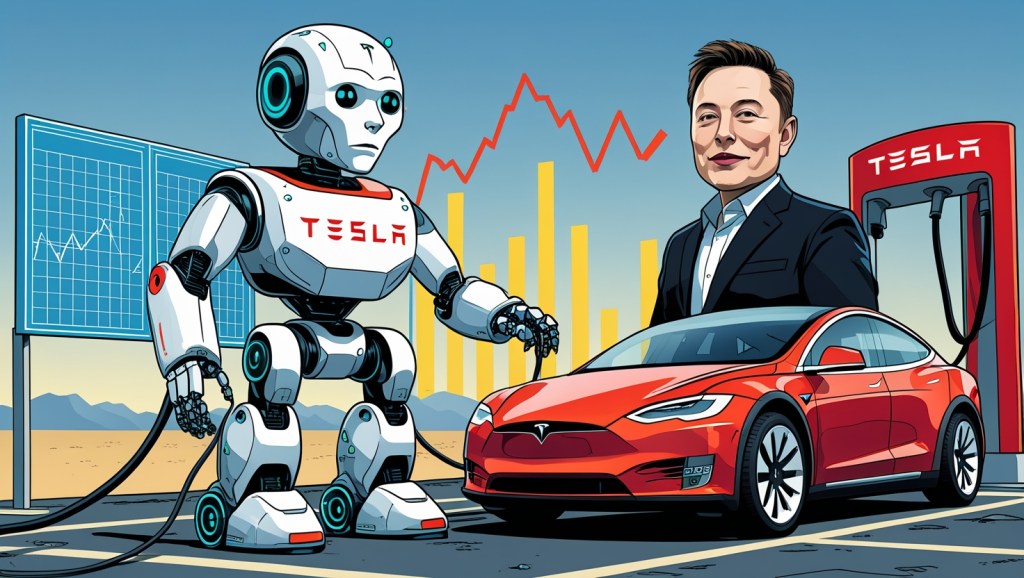
Tesla just released its Q2 2025 earnings, and as usual, all eyes were on Elon Musk. The company beat profit expectations, even as vehicle deliveries stayed flat. But the real story lies deeper: cost-cutting measures boosted margins, while energy and AI divisions quietly took the spotlight.


Key Takeaways from the Report

▶ Profit Beats Expectations

Tesla posted $3.8 billion in profit, above analyst forecasts. Margins climbed to 19%, driven by production efficiency and aggressive cost controls.

▶ Software Outpaces Hardware

While EV deliveries were slightly down, revenue from FSD subscriptions and software rose significantly. Tesla is slowly transitioning from carmaker to tech platform.

▶ AI and Energy Are Scaling

Tesla Energy grew 31% YoY, with solar and battery deployments on the rise. Meanwhile, the Dojo supercomputer — designed to train Tesla’s autonomous systems — is live, with early signs of commercialization.


Why It Matters

  • Tesla is becoming Apple on wheels. The car is just hardware — the money is in software and ecosystem lock-in.
  • EVs are just Phase One. Tesla’s real ambitions lie in AI, robotics, and decentralized energy.
  • Musk is building infrastructure, not just products. That’s a long-game most companies aren’t playing.

Should You Still Bet on Tesla?

If you’re in it for the future — AI, energy, mobility — Tesla remains a strategic pick. But:

  • Valuation is stretched — high expectations make it vulnerable to market sentiment.
  • Geopolitical and regulatory risks are rising, especially in Europe and China.
  • Musk’s central role is both Tesla’s greatest asset and biggest liability.

Final Thoughts: Tesla Isn’t Playing the Same Game

Tesla’s Q2 2025 earnings prove it’s not just an EV company. It’s building the backend of a post-oil, post-driver economy. If you’re only tracking car sales, you’re missing the point.

Watch the infrastructure. That’s where Tesla’s real story lives.


References

Tesla Investor Relations, Q2 2025 Earnings Report.
Reuters, Tesla Surprises with Strong Profit as Energy and AI Units Surge, 2025.
TechCrunch, Tesla’s Dojo Supercomputer Goes Live in Q2 2025.

Google Earnings: What Big Tech’s Q2 Results Say About the Digital Economy


A Snapshot of Power: Google’s Q2 Report Arrives

Alphabet (Google’s parent company) just released its earnings for Q2 2025, and the numbers aren’t just about revenue or profit — they’re a direct reflection of how power and influence are shifting in the digital economy. While traditional sectors face slowdowns, Google posted higher-than-expected earnings, fueled by AI products, YouTube ad revenue, and cloud growth. But this isn’t just a victory lap for shareholders. It’s a wake-up call for anyone navigating tech, money, or media.


Key Highlights from the Report

▶ Revenue Beats Expectations

Alphabet reported $82.3 billion in revenue, up 11% from last year. Google Search and YouTube Ads remain the cash cows, but Google Cloud is the real story here, growing faster than both.

▶ AI Integration Pays Off

Their heavy investment in AI models like Gemini and infrastructure like TPUv5 is finally showing ROI. Businesses are now paying Google to power their own AI tools, and the demand is not slowing.

▶ YouTube’s Monetization Model Is Working

Shorts. Premium. Subscriptions. It’s no longer just ads. YouTube is diversifying its revenue the way Netflix did, but faster.


What It Really Means (And Why You Should Care)

Google isn’t just a company; it’s a modern-day utility. These earnings prove that:

  • Owning distribution + infrastructure = domination. Google owns the pipes (Search, Chrome, Android), the tools (Docs, Gmail), and now, the brain (AI). That’s vertical integration on steroids.
  • Tech is no longer cyclical — it’s foundational. While other industries rise and fall, Big Tech is the new baseline of economic activity.
  • Your data is their dividend. Google’s earnings are a direct result of how much attention and behavioral data they monetize. It’s profitable because we’re predictable.

Should Investors Still Bet on Google?

If you’re looking long-term: yes. Google’s ability to adapt, absorb competitors, and invest in infrastructure keeps them future-proof. However, regulation is looming. Antitrust heat is real, especially in the EU and U.S.

For retail investors, this also means:

  • Watch Google’s cloud and AI divisions, not just ad revenue.
  • Stay alert for shifts in regulatory frameworks around privacy and data ownership.
  • Consider ETFs that are tech-heavy but diversified (in case of big-tech backlash).

Conclusion: The Empire Expands

Google’s Q2 earnings aren’t just a corporate win. They’re a signal. AI isn’t hype anymore. Cloud isn’t optional. Content isn’t king — distribution is. If you want to understand where the economy is going, stop watching Wall Street and start following the infrastructure of the internet.

Read between the earnings. That’s where the future is hiding.


References

Alphabet Investor Relations, Q2 2025 Earnings Report. Bloomberg Tech, Google Beats Expectations on Cloud and AI Revenue, 2025. The Verge, YouTube Premium Growth Signals New Monetization Era, 2025.

What “The Psychology of Money” Teaches Us About Building Better Habits

Why Money Is More About Behavior Than Math

In “The Psychology of Money,” Morgan Housel presents a radical yet simple idea: managing money well has less to do with IQ and more to do with mindset. You can be a genius and still go broke. Or you can be ordinary and build wealth slowly, consistently, and wisely.

What separates these outcomes? Behavior. Not spreadsheets, not formulas, but the way we react to risk, greed, fear, luck, and ego.

Understanding your relationship with money is the first step toward reshaping your habits. Because if you keep trying to fix your finances without fixing your mindset, you’ll keep spinning in circles.

5 Game-Changing Lessons From the Book

1. Wealth Is What You Don’t See

Real wealth isn’t flashy. It’s not the car or designer bag. It’s the money you didn’t spend. It’s the quiet bank account, the investments compounding in the background.

“Spending money to show people how much money you have is the fastest way to have less money.”

2. Saving Money Just to Save

You don’t need a reason to save. Emergencies don’t send calendar invites. Saving gives you options, and options give you freedom.

3. Reasonable Is Better Than Rational

You don’t have to be perfectly rational with money. Just reasonable. That means budgeting in a way that works for your life and emotional reality, not only what a financial calculator says.

4. Luck and Risk Walk Together

Good decisions can lead to bad outcomes, and bad decisions can sometimes be rewarded. Don’t measure success by one moment. Play the long game.

5. Everyone’s Playing a Different Game

Stop comparing your progress to others. Their goals, timelines, and risk tolerance are different. What works for a day trader doesn’t work for a parent saving for college.

How to Apply These Lessons in Real Life

  • Track your spending without obsessing. Awareness is more powerful than restriction
  • Start a small emergency fund, even if it’s just $100 to begin with
  • Unfollow influencers that make you feel behind
  • Invest in low-cost index funds instead of chasing the next hype
  • Celebrate small wins: a week without takeout, one bill paid off, a savings transfer

The goal isn’t perfection. It’s momentum.

Is This the Right Book for You?

If you:

  • Struggle with impulse spending
  • Want to save but feel stuck
  • Keep comparing yourself to others
  • Feel anxious when talking or thinking about money

This book is a must-read. It’s not about tactics. It’s about awareness. It’s not about becoming a financial robot. It’s about becoming more human, on your terms.

And it’s short. You can read it in a weekend and think about it for a lifetime.

Where to Buy It

Ready to shift your money mindset? Grab your copy of The Psychology of Money on Amazon and start seeing finance through a new lens.

👉 Buy on Amazon

Conclusion: Fix the Habit, Not Just the Math

You don’t need to master complex formulas to build a solid financial life. You just need to master yourself. The Psychology of Money gives you the emotional and behavioral tools to do just that.

So the next time you ask yourself, “Why can’t I save?” or “Why do I feel behind?” maybe the answer isn’t more knowledge. Maybe it’s a better habit.

Start with this book.

How to Build Wealth Slowly (and Why It Works Better Than You Think)


The Myth of Overnight Success

We’re surrounded by get-rich-quick stories — viral stocks, crypto millionaires, overnight startup founders. But for 99% of people, true wealth isn’t loud, fast, or flashy. It’s consistent, boring, and built brick by brick.

Building wealth slowly means mastering habits, not hacks. It’s not sexy, but it works. And unlike speculative wins, it lasts.


What “Slow Wealth” Actually Looks Like

Slow wealth isn’t about laziness — it’s about intentionality. Here’s what it really means:

  • Living below your means even when your income rises
  • Investing consistently in index funds or dividend stocks
  • Avoiding lifestyle creep (upgrading your life with every raise)
  • Paying off debt strategically while saving
  • Building an emergency fund before chasing high-risk assets

This approach trades instant gratification for long-term security. It compounds — financially and emotionally.


The Power of Compounding (aka The 8th Wonder)

You’ve heard it before, but it bears repeating:

“Compound interest is the eighth wonder of the world.” — Einstein (allegedly)

Here’s why it matters:

Monthly InvestmentReturn RateAfter 20 Years
$1008%$58,902
$3008%$176,707
$5008%$294,512

Small amounts, invested consistently, build massive results — especially if you start young.


Why Most People Fail at This

It’s not math. It’s mindset.

  • We underestimate time and overestimate talent
  • We’re addicted to fast results
  • Social media pushes instant wealth fantasies
  • Most schools teach debt, not wealth

Building wealth slowly feels invisible at first. That’s why so few people stick with it. But those who do, win.


Recommended Books to Change Your Financial Mindset

  1. The Psychology of Money by Morgan Housel
    → Short, powerful stories about long-term thinking.
  2. Your Money or Your Life by Vicki Robin
    → A classic on redefining wealth and conscious living.
  3. The Millionaire Next Door by Thomas Stanley
    → Research-backed proof that most wealthy people live modestly.
  4. Automatic Millionaire by David Bach
    → Simple systems for making wealth-building effortless.

Final Thoughts: Wealth Isn’t a Destination — It’s a Practice

If you want to be wealthy one day, start acting like it today.

Skip the hype. Focus on the fundamentals. Put your money to work slowly, silently, and smartly. Because 10 years from now, you’ll wish you had started today.

Social Security July 2025 Payments: What the $5,108 Payout Means for Americans


What’s Behind the Surge in Social Security Searches?

Social Security payments are trending again in July 2025. The reason? Some Americans are set to receive up to $5,108in benefits this month, sparking confusion, excitement, and plenty of misinformation. But who qualifies for this full amount, and what does it really say about the current state of financial support in the U.S.?


Who Actually Gets $5,108 This Month?

Despite the headlines, $5,108 is not the average payment. It’s the maximum benefit available in very specific conditions:

  • You must have retired at age 70 (not earlier)
  • You must have paid the maximum amount into Social Security over 35+ years
  • Your income history must place you in the top tax bracket

For most retirees, the average Social Security check is closer to $1,900 in July 2025.


Why This Matters More Than Ever in 2025

The spike in Social Security interest reveals more than just curiosity. It exposes deep anxieties about:

  • Inflation still pressuring fixed incomes
  • A possible recession on the horizon
  • Ongoing debates over the future of Social Security funding

Americans are asking: Will this system still be here for me? And if so, how much will it actually help?


How to Maximize Your Own Social Security Benefits

Whether you’re decades away from retirement or getting close, here’s how to plan smarter:

  1. Work at least 35 full years — short gaps lower your average
  2. Delay retirement until age 70 if possible
  3. Track your earnings annually via ssa.gov
  4. Use benefit calculators to model different retirement ages
  5. Learn from books like:
    • “Social Security Made Simple” by Mike Piper
    • “Get What’s Yours: The Secrets to Maxing Out Your Social Security” by Laurence Kotlikoff

Final Thoughts: Headlines Don’t Equal Reality

Seeing “$5,108” in a headline makes for great clicks. But it’s crucial to understand the context and eligibility behind the numbers. For most Americans, maximizing benefits will require years of strategic planning — not wishful thinking.

Instead of chasing viral figures, focus on what you can control: contribution, timing, and staying informed.


References

  • Newsweek, “Social Security Payments Up to $5,108 Going Out This Week”, July 2025
  • SSA.gov, Retirement Planner and Benefits Estimator
  • AOL.com, “Average Social Security Payment for July 2025”

Microsoft SharePoint Under Attack: What This Vulnerability Reveals About Big Tech’s Security Flaws


A Critical Breach Hits Microsoft SharePoint

In July 2025, Microsoft confirmed that a severe SharePoint vulnerability was exploited by hackers in a coordinated cyberattack affecting over 100 organizations worldwide. While details are still emerging, initial reports suggest a zero-day exploit was involved, enabling unauthorized access to internal systems with administrator-level privileges.

This isn’t just a Microsoft issue. It’s a wake-up call about how increasingly fragile the backbone of digital collaboration has become. SharePoint, used by thousands of governments, corporations, and institutions, is not just a document hub. It’s an operational nerve center. When it gets hacked, everything is at risk.


What Happened (And Why It Matters)

According to Reuters, cybersecurity researchers uncovered that the breach exploited a critical vulnerability that allowed remote code execution. Microsoft released an emergency patch, but not before significant damage was likely done. Key affected sectors include:

  • Government agencies
  • Healthcare networks
  • Corporate HR and financial departments

“This could be as big as SolarWinds,” said one researcher. “But with a more targeted, invisible impact.”

This breach raises major concerns about the overreliance on Big Tech platforms and the concentration of sensitive data under a few cloud providers.


Why Big Tech Keeps Failing at Cybersecurity

While Microsoft touts its multi-billion-dollar investments in security, this isn’t the first time its infrastructure has been breached. From Exchange Server hacks to Azure credential leaks, the pattern is clear:

  • Big Tech is reactive, not proactive
  • Security patches often come after widespread exposure
  • Complex platforms have too many attack surfaces

Worse, smaller businesses and public institutions often lack the resources to keep up with constant security updates and mitigation efforts.


What Can Businesses and Users Do Now?

If your organization uses SharePoint or similar Microsoft services, it’s time to:

  1. Apply the latest patches immediately
  2. Audit all user permissions and access logs for the past 30 days
  3. Segment critical data from cloud-based platforms when possible
  4. Consider hybrid or decentralized alternatives for sensitive documents

Tip: Tools like NextcloudNotion (self-hosted), or even zero-trust file management systems can provide layered redundancy against centralized failures.


Beyond the Breach: A Digital Security Reckoning

The Microsoft SharePoint attack is not just a technical hiccup. It’s a signal that we’re approaching a collapse of trust in monolithic platforms. In a world where AI-generated content, deepfakes, and algorithmic manipulation are already challenges, infrastructure vulnerability is the final piece that makes the whole system fragile.

Cyberattacks are no longer disruptive events. They’re becoming routine. And Big Tech is no longer the invincible fortress it pretended to be.


Final Thoughts: Don’t Wait for the Next Patch

If you’re relying on Microsoft or any large platform to protect your data without independent verification, backups, or redundancy, you’re playing with fire.

Start building a tech stack that values security, transparency, and decentralization. And most importantly, stay informed.

Because the next breach won’t wait for you to act.


References

  • Reuters, “Microsoft server hack hit about 100 organizations, researchers say”, 2025.
  • Microsoft Security Blog, July 2025.
  • Wired, “Why SharePoint Keeps Getting Hacked”, 2023.

Social Security Payments Are Up in July 2025: Who’s Getting the $5,108 Checks?


Why Are Social Security Payments Increasing This Month?

If you’ve noticed headlines mentioning checks of up to $5,108 being sent out in July 2025, you’re not imagining things. The Social Security Administration (SSA) is issuing larger-than-usual payments this month due to a combination of factors:

Cost-of-Living Adjustments (COLA)

The COLA for 2025 increased by 3.2%, impacting monthly benefits across the board. These adjustments are tied to the Consumer Price Index (CPI) and aim to preserve purchasing power in a high-inflation environment.

Special Benefit Tiers

Not everyone will see the $5,108 amount. This figure is reserved for retirees who:

  • Waited until age 70 to claim benefits
  • Earned at or near the maximum taxable income for 35 years

These beneficiaries are in the top 1% of earners and planners.


Who Qualifies for the $5,108 Payment in July 2025?

Full Retirement Age Claimants

If you retired at full retirement age (FRA) — currently 67 for those born in 1960 or later — your monthly benefit will be higher than those who claim earlier.

High-Income Earners

Only those who paid the maximum payroll tax throughout their careers can qualify for the top payout. The SSA caps this amount annually (in 2025, the max taxable earnings are $168,600).

Most retirees, however, receive between $1,600 and $2,200 per month depending on their work history and age of retirement.


How Much Will You Actually Receive?

The average Social Security check in July 2025 breaks down as follows:

CategoryAverage Monthly Benefit
Retired Worker$1,907
Disabled Worker (SSDI)$1,537
Survivor Benefits$1,544
Maximum at Age 70$5,108

Key July 2025 Payout Dates:

  • July 3: For those who began receiving benefits before May 1997
  • July 10, 17, 24: For those with birthdays on the 1st–31st (varies by day range)

3 Tips to Maximize Your Social Security Benefits

  1. Delay Your Claim Waiting until age 70 increases your benefit by 8% per year after FRA.
  2. Minimize Taxes Up to 85% of your benefits can be taxable. Use Roth conversions and limit withdrawals.
  3. Coordinate with Other Income Sources Align your Social Security with 401(k), pension, and part-time income to avoid hitting tax cliffs.

Smart Tools to Track Your Payments (And Plan Ahead)

  • SSA.gov: Official portal for checking benefits and payment schedule
  • Personal Capital: Free tool to visualize your retirement projections
  • YNAB (You Need A Budget): Helps you plan monthly spending around fixed income

Bonus tip: Bookmark Smart Money Tech for real-time updates, tech tools, and smarter money habits.


Conclusion: Bigger Checks, Bigger Decisions

July’s payments are making headlines, but the real opportunity lies in long-term strategy. Understanding how and when to claim, combined with the right tools and planning, can lead to real financial freedom.

Don’t just wait for the next deposit — build a strategy around it.

Stay informed. Stay smart. And never outsource your financial future.


References

  • Newsweek, “Social Security Payments Up to $5,108 Going Out This Week”, 2025.
  • SSA.gov, Payment Schedule for 2025.
  • AOL.com, “What’s the average Social Security payment for July 2025?”, 2025.

AI Personal Finance Assistants: Can You Really Trust Robots with Your Money?


Imagine a world where you never have to log into your banking app, track receipts, or wonder if you’re overspending. Instead, an AI-powered financial assistant monitors your accounts, predicts your cash flow, and suggests smart moves in real time—like a digital CFO in your pocket.

This vision is quickly becoming reality. From startups to Big Tech, companies are racing to build AI tools that promise to revolutionize personal finance. But as these tools gain popularity, a critical question emerges: Should you trust an algorithm to manage your money?


How AI Personal Finance Assistants Work

AI financial assistants combine machine learning, natural language processing (NLP), and predictive analytics to help you:

✅ Track Expenses: Automatically categorize transactions and identify trends.
✅ Set Goals: Create budgets and savings targets based on your habits.
✅ Receive Advice: Get customized recommendations for investing, paying off debt, or optimizing cash flow.
✅ Automate Tasks: Pay bills, transfer funds, and even invest—all hands-free.

According to Netguru, the real power of AI lies in its ability to analyze massive datasets and deliver personalized financial advice at scale.

“AI can process thousands of transactions and behavioral patterns to predict financial needs before users even realize them,” notes Netguru’s report.


Why AI Finance Apps Are Surging in Popularity

The rise of these assistants isn’t just about convenience. Several forces are driving adoption:

  • Financial Anxiety: More people want proactive tools that reduce stress and help them feel in control.
  • Democratization of Advice: AI can provide basic guidance that was once only available through expensive financial planners.
  • Generative AI Boom: Tools like ChatGPT have set new expectations for what AI can do conversationally.
  • Integration with Banks: Open banking APIs make it easier to connect accounts securely.

Case Study: Building a Virtual Finance Advisor

IBM’s developer tutorial shows how generative AI models can create conversational experiences that understand user intent and deliver dynamic insights.

Meanwhile, in an experiment published on Medium, a developer built a personal AI finance coach using local language models—showing that even independent creators can launch advanced tools without a huge budget.


Benefits of Using AI Financial Assistants

Here’s what sets these apps apart:

🌟 24/7 Monitoring: Your AI doesn’t sleep—it keeps tabs on every transaction in real time.
🌟 Hyper-Personalization: Recommendations adapt as your financial situation evolves.
🌟 Cost Efficiency: Many AI tools are free or cost a fraction of traditional advisors.
🌟 Behavioral Nudges: Subtle prompts can help users make smarter decisions without feeling pressured.


But… Can You Trust an Algorithm?

Despite the promise, there are serious concerns you shouldn’t ignore:

🔸 Data Privacy: These assistants require access to your most sensitive financial data. Even reputable providers can be vulnerable to breaches.
🔸 Bias and Errors: AI models can inherit biases from their training data or deliver inaccurate recommendations.
🔸 Over-Reliance: Automated advice isn’t a substitute for professional guidance in complex situations.
🔸 Transparency: Many AI tools are “black boxes,” making it hard to understand how decisions are made.

“No AI model is infallible,” warns Intellias in their market report“Users must balance automation with informed oversight.”


How to Choose the Right AI Finance App

If you’re considering integrating an AI assistant into your financial life, start with these steps:

✅ Research the Provider: Check reviews, security policies, and data handling practices.
✅ Start Small: Test basic features before automating large financial decisions.
✅ Understand the Model: Look for tools that explain their recommendations clearly.
✅ Maintain Oversight: Treat AI as an advisor, not an authority.


AI personal finance assistants are no longer science fiction—they’re becoming an everyday tool for millions. They offer powerful ways to stay organized, reduce anxiety, and build better habits.

But as with any disruptive technology, it’s essential to approach them with a critical eye.

Trust, but verify. Because in the end, no app cares about your money as much as you do.


References

  • Netguru. Personalized Financial Advice through AI. 2025.
  • Intellias. AI Financial Assistant App Development. 2025.
  • IBM Developer. Build a Virtual Personal Finance Advisor with GenAI. 2025.
  • Medium. How I Built a Personal Finance AI Assistant. 2025.