
How Inflation-Proof Is Your Portfolio? Tech Stocks, Commodities, and Beyond


Inflation isn’t just a headline — it’s a daily reality. From groceries to rent, rising costs are eroding purchasing power faster than most investors expected. In 2025, protecting your wealth against inflation is no longer optional.

But is your portfolio truly prepared? Let’s explore how tech stocks, commodities, real estate, and alternative assets hold up when prices keep climbing.


Understanding Inflation Protection

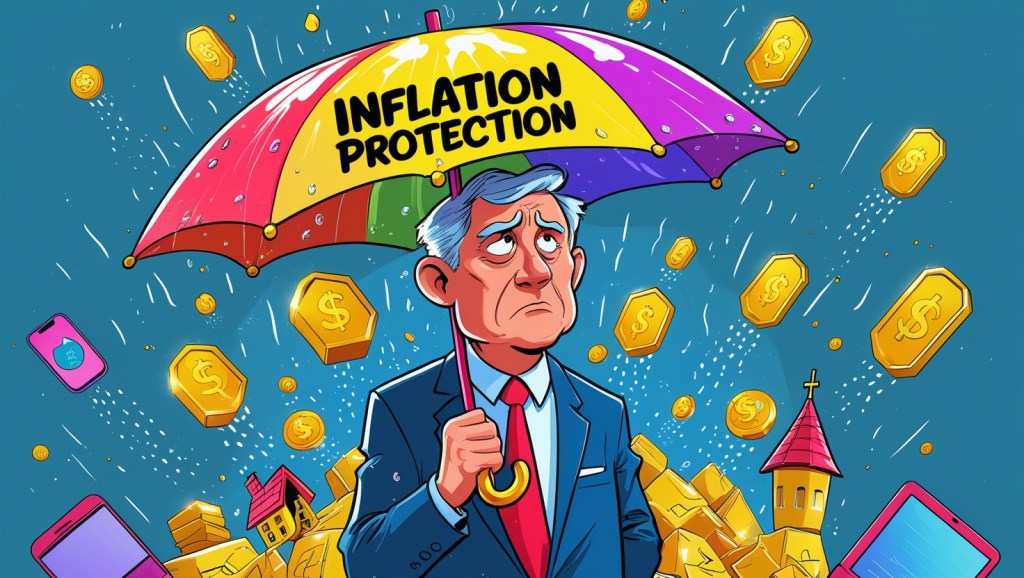
An “inflation-proof” asset is something that maintains or increases in value as the cost of living rises. While no investment is perfect, certain assets have historically performed better during inflationary periods.

Here’s what you need to know:

✅ Commodities tend to rise because their prices are directly linked to supply and demand.
✅ Real estate can adjust rents and property values over time.
✅ Tech stocks are more volatile — but some companies can maintain pricing power.


Commodities: Classic Inflation Hedge

Gold, oil, and agricultural commodities have long been favored during high inflation.

| Commodity | Why It Helps | Risk Factor |\n|—————-|—————————————-|——————————–|\n| Gold | Store of value over centuries | No yield, price swings |\n| Oil | Energy demand drives prices | Geopolitical risk, regulation |\n| Agriculture| Essential goods with inelastic demand | Weather dependency |\n\nPro Tip: ETFs like GLD (Gold) or DBC (broad commodities) make it easier to gain exposure without holding physical assets.


Real Estate: A Tangible Inflation Buffer

Properties often benefit from inflation because:

  • Rents can be increased over time
  • Property values tend to rise with building costs and land scarcity

Many investors use REITs (Real Estate Investment Trusts) for diversification. Examples include:

  • VNQ (broad US real estate)
  • O (Realty Income, focused on retail and commercial leases)

Tech Stocks: High Risk, Potential Reward

In theory, tech companies with strong pricing power can pass higher costs to consumers. However, rising interest rates— which often accompany inflation — can hammer tech valuations.

Which tech sectors are more resilient?

✅ Large-cap software companies (recurring revenue)
✅ Cloud infrastructure providers
✅ Essential business services

Be cautious with speculative startups that depend on cheap borrowing to grow.


Diversification Is Still the Best Defense

A balanced inflation-resilient portfolio could look like:

  • 40% broad US equities
  • 20% commodities or commodity ETFs
  • 20% REITs
  • 10% Treasury Inflation-Protected Securities (TIPS)
  • 10% cash or alternatives

No allocation guarantees success, but diversification reduces the chance of major losses.


Conclusion

Inflation is here, and it may stick around longer than many expect. Protecting your portfolio means understanding which assets historically perform best — and being ready to rebalance when conditions change.

🎯 Want help creating a resilient investment plan? Subscribe to Smart Money Tech for weekly insights and practical guides.


References

  • Bureau of Labor Statistics, US Inflation Data, 2025.
  • Investopedia, “Inflation Hedging Strategies,” 2024.
  • CNBC, “How Investors Are Fighting Inflation,” 2025.

The Hidden Costs of “Free” Budgeting Apps: What You’re Really Paying For


Free budgeting apps are everywhere. With colorful dashboards and promises to simplify your finances, they’ve become essential tools for millions trying to save more and spend smarter. But behind the polished interfaces and zero-dollar price tags lurks a question many users never ask: How are these apps really making money?

Let’s pull back the curtain on the hidden costs of “free” budgeting tools — because in personal finance, nothing is ever truly free.


How Free Budgeting Apps Actually Make Money

Selling Your Data

The most common business model is built on data monetization. When you connect your bank account or credit card, the app can collect detailed information about your spending habits. This data can be:

  • Sold to third parties, including advertisers and market researchers.
  • Used to create targeted ads inside the app itself.
  • Combined with data from other users to spot trends and inform corporate clients.

You might think, “I don’t mind if they know I spend $20 on coffee,” but over time, these insights can paint an intimate portrait of your life — your income, your debts, even your health-related purchases.


Pushing Paid Financial Products

Some apps act as lead generation engines for banks, credit card companies, and lenders. Once they have your financial profile, they can suggest products that match your credit score or spending patterns — and earn a commission when you sign up.

Examples of commonly promoted products:

  • High-interest personal loans
  • Credit cards with annual fees
  • “Premium” subscriptions you may not need

This creates a potential conflict of interest: Is the app recommending what’s best for you, or what pays them the most?


Upselling Premium Features

Many “free” apps adopt a freemium model, luring you in with basic tools and then charging for:

  • Custom reports
  • Extra financial goals
  • Advanced investing features
  • Ad-free experiences

While not inherently bad, these upgrades can quietly drain your budget if you’re not careful.


How to Protect Yourself

Here are practical steps to avoid paying more than you bargained for:

✅ Read the privacy policy. Look for mentions of data sharing with third parties.

✅ Limit permissions. Only connect the accounts you absolutely need.

✅ Use disposable emails. Keep marketing spam away from your main inbox.

✅ Compare premium upgrades. Before paying, check if a competitor offers similar features for less.

✅ Consider open-source or paid apps with transparent business models. Sometimes paying a small fee upfront is cheaper (and safer) than giving away your data.


Free budgeting apps have transformed how we manage money. But “free” often comes with hidden costs that most people never see until it’s too late.

If you want true financial control, start by understanding how your tools profit from your habits — and make conscious decisions about what you share.

Want more tips on protecting your financial data? Subscribe to our newsletter for in-depth guides and exclusive resources.


References

  • NerdWallet, “How Budgeting Apps Make Money,” 2024.
  • Investopedia, “The Hidden Costs of Free Finance Apps,” 2023.
  • Financial Times, “Privacy Risks in Personal Finance Tools,” 2023.

Is the Amex Platinum Still Worth the $695 Annual Fee in 2025?


A Prestige Card Under Pressure

In 2025, the American Express Platinum Card still carries its luxury weight — and its eye-watering $695 annual fee. But with rising competition from cards like the Chase Sapphire Reserve and Capital One Venture X, many are wondering:

Is the Amex Platinum still worth it?

Let’s unpack what you’re actually getting — and whether the benefits justify the price tag.


Core Benefits: What You Get for $695

BenefitValue Estimate (Annual)
Uber Credits ($15/mo + Dec bonus)$200
Airline Fee Credit$200
Saks Fifth Avenue Credit$100
Global Entry / TSA PreCheck$100 (every 4 years)
Lounge Access (Centurion + PP)$500+ (depends on usage)
Hotel Elite Status (Hilton, Marriott)Varies
Fine Hotels & Resorts PerksHigh (if used often)

Total estimated value: $1,100–$1,500, depending on your lifestyle.


Hidden Value: Lifestyle + Prestige

The Amex Platinum isn’t just about math — it’s about image and access:

  • VIP event access and concierge service
  • Exclusive bookings and partnerships
  • Priority at luxury brands and travel networks

For frequent travelers and business-class flyers, these soft perks carry major weight. But if you don’t travel often, the card quickly loses shine.


The 2025 Competition Is Fierce

CardAnnual FeeKey Difference
Chase Sapphire Reserve$550More flexible rewards, better dining perks
Venture X$395Lower fee, easy-to-use credits
Amex Gold$250Better for food/dining-focused users

Unless you travel frequently and use the perks aggressively, it’s hard to justify $695 when others offer 70–90% of the value for half the fee.


Verdict: Who Should Keep It in 2025?

✅ Keep the Amex Platinum if you:

  • Fly business class multiple times a year
  • Regularly use airport lounges
  • Value the prestige and concierge service
  • Max out the credits annually

⛔ Consider canceling or downgrading if you:

  • Rarely fly or stay at luxury hotels
  • Don’t take advantage of the credits
  • Prefer cashback simplicity or lower fees

Conclusion: Still Worth It — But Only for the Right Traveler

In 2025, the Amex Platinum is still one of the most powerful travel cards in the world. But it’s no longer a no-brainer. With new players offering competitive perks at lower costs, this card now demands active usage to break even — and even more effort to come out ahead.

🎯 Pro tip: If you’re considering the Platinum, always run the math based on your real travel habits, not just the card’s glossy marketing.


References

  • American Express Platinum Card Terms & Conditions, 2025.
  • NerdWallet, Amex Platinum vs Competitors, 2025.
  • The Points Guy, Lounge Access Value Guide, 2025.

Best Travel Credit Cards in 2025: Premium Picks Compared


The Travel Card Showdown of 2025

When it comes to travel credit cards in 2025, the market is saturated with perks, annual fees, and confusing fine print. But if you’re serious about maximizing points, luxury benefits, and travel protection, three cards continue to dominate the premium space:

  • American Express Platinum
  • Chase Sapphire Reserve
  • Capital One Venture X

So which one actually delivers the most value in 2025? Let’s break it down.


Annual Fees vs. Perks: Are They Worth It?

CardAnnual FeeLounge AccessTravel CreditsKey Perks
Amex Platinum$695Centurion + Priority Pass$200 airline creditUber credits, Fine Hotels, TSA PreCheck
Chase Sapphire Res.$550Priority Pass Select$300 travel credit3x points on travel & dining, DoorDash, Lyft
Venture X$395Capital One + Priority Pass$300 hotel/air credit10x on hotels, 5x on flights, flexible rewards

Amex Platinum wins on luxury. Venture X wins on cost-effectiveness. Chase strikes a balance.


Points Systems: Who Rewards You More?

  • Amex Platinum: 5x points on flights booked through Amex Travel. Redemption via Membership Rewards.
  • Chase Sapphire Reserve: 3x on travel and dining. 1.5x redemption value via Chase Ultimate Rewards.
  • Venture X: Simpler — 2x on everything, 5–10x on travel through Capital One Travel.

If you like simplicity, Venture X wins. If you know how to maximize reward portals, Chase and Amex offer better long-term value.


Real Traveler Use Cases

Type of TravelerBest CardWhy
Business JetsetterAmex PlatinumUnmatched lounge access + elite hotel status
Frequent FlyerChase Sapphire ReserveGreat travel protections and partner redemptions
Casual TravelerVenture XLow annual fee, great baseline rewards
Points HackerChase or AmexBetter portals and transfer partners

Conclusion: There’s No “Best” — Only the Best for You

In 2025, the premium travel card market has matured. Amex Platinum gives you status. Chase Sapphire gives you flexibility. Venture X gives you simplicity.

If you want luxury, go Amex. If you want value, try Venture X. If you want balance and flexibility, Chase still holds strong.

✈️ Want more breakdowns like this? Subscribe to our newsletter and get weekly comparisons, financial tips, and tech insights from Smart Money Tech.


References

  • American Express Official Site, Platinum Card Benefits, 2025.
  • Chase, Sapphire Reserve Guide, 2025.
  • Capital One, Venture X Benefits, 2025.
  • NerdWallet, Best Travel Credit Cards Review, 2025.

Northrop Grumman Stock Soars: Should You Bet on the Military-Industrial Complex?


A War-Economy Stock on the Rise

Northrop Grumman isn’t just another defense contractor — it’s a powerhouse of America’s military-industrial complex. With a fresh $8 billion space contract from the Pentagon and rising global tensions, the company’s stock has been climbing fast. But is it a smart buy — or a dangerous bet on endless conflict?

Let’s break down the real story behind the hype.


What Does Northrop Grumman Actually Do?

Northrop is behind some of the most advanced defense systems in the world, including:

  • The B-21 Raider stealth bomber
  • Autonomous drones and satellite systems
  • Cybersecurity and AI warfare platforms
  • Missile defense and space tech

They don’t just build weapons — they engineer the digital infrastructure of 21st-century war.

With U.S. defense spending projected to exceed $900 billion in 2025, companies like Northrop are deeply embedded in government pipelines. And that’s exactly why investors are watching closely.


Why the Stock Is Surging

Several factors are fueling the current rally:

  • ✅ $8B Space Contract: A new long-term government deal focused on space surveillance and defense.
  • ✅ Geopolitical Tensions: Rising instability with China, Russia, and Iran is pushing demand for defense systems.
  • ✅ Election-Year Defense Budgets: Politicians on both sides of the aisle are boosting military funding.
  • ✅ Tech Advantage: Northrop is seen as a leader in next-gen warfare, not just traditional arms.

In a market increasingly dominated by uncertainty, defense stocks look like a safe (and profitable) hedge.


Risk vs. Reward: Is It Worth It?

MetricCurrent Value (2025)
Stock Price (YTD)+22.8%
Dividend Yield~1.5%
Price-to-Earnings (P/E)18.2
5-Year Government Contracts~$75B estimated backlog

Northrop offers moderate dividendsstrong growth, and predictable revenue — thanks to federal contracts that span decades.

But don’t forget: the value of this stock is literally tied to the business of war.


The Ethical Dilemma

Investing in defense isn’t neutral. It raises valid moral questions:

  • Are you supporting innovation or destruction?
  • Is it ethical to profit from perpetual conflict?

Some investors are choosing defense ETFs (like ITA or DFNS) to gain exposure while diluting the ethical tension. Others prefer aerospace-only funds or cyber-defense plays with less direct ties to weaponry.


Conclusion: A Stock Built for Conflict

Northrop Grumman stock is rising because the world is unstable — and the business of conflict remains strong.

If you’re looking for a hedge against geopolitical chaos, this may be it. But if you’re investing with your conscience, think twice before betting on war as a business model.

Want more breakdowns like this? Subscribe to our [Trends Watch 2025] series and stay ahead of the economic pulse.


References

  • Bloomberg, “Northrop Grumman Wins Pentagon Space Contract”, 2025.
  • Defense News, “Top 5 Military Contractors by Revenue”, 2025.
  • CNBC, “Defense Stocks Outperform Amid Global Tensions”, 2025.

Oil Futures: What the Surge Means for Your Wallet and the Global Economy


Oil Futures Are Spiking — Here’s Why It Matters

In the last 24 hours, “oil futures” saw a massive surge in search interest, jumping over 300% in the U.S. This isn’t just a headline for Wall Street traders — it’s a flashing warning light for your everyday budget, from gas prices to airline tickets.

But what exactly are oil futures, and why should you care? Let’s break it down.


What Are Oil Futures?

Oil futures are contracts that allow buyers to lock in the price of oil for a future date. They’re a key part of the commodities market, and they directly influence the cost of gasoline, diesel, shipping, and even food.

In plain English: when oil futures go up, it’s usually a sign that prices at the pump — and everywhere else — will soon follow.


Why the Price Spike Now?

This week’s surge in oil futures has been fueled by a potent mix of geopolitical tension and economic speculation:

  • Middle East Instability: Any hint of conflict near major oil producers (like Iran or Saudi Arabia) sends prices skyrocketing due to fear of supply disruption.
  • OPEC Production Cuts: The Organization of the Petroleum Exporting Countries (OPEC) has hinted at continued supply tightening.
  • U.S. Strategic Reserves: The U.S. is still refilling its emergency oil reserves, pushing demand.
  • AI and Algorithmic Trading: A lesser-known factor, automated trading bots are now triggering price rallies based on keyword volatility, not just fundamentals.

This isn’t just economics — it’s code, politics, and fear working together.


How It Affects You

Here’s where it gets personal. Rising oil futures almost always ripple into:

AreaImpact
Gas PricesExpect a $0.10–$0.30 increase per gallon soon
Air TravelTicket prices could spike by 5–10%
GroceriesShipping costs may raise produce/meat prices
Energy BillsHome heating and electricity could get costlier

This is inflation 2.0 — and it’s creeping into your daily life.


Should You Invest in Oil?

Maybe — but tread carefully.

While oil ETFs and stocks (like ExxonMobil or Chevron) can benefit from rising futures, this is not a “get rich quick” scenario. Geopolitical events are notoriously volatile. One peace treaty or demand drop, and prices tumble.

Smarter Strategy: If you want exposure, consider diversified energy ETFs or sustainable alternatives like clean energy funds — which often rise when fossil fuel prices scare consumers.


Conclusion: Don’t Just Watch Oil, Watch the Whole System

The spike in oil futures is more than a trader’s drama — it’s a signal of how vulnerable our economy is to shocks. Whether you’re investing, budgeting, or planning your next trip, now’s the time to keep a close eye on this invisible fuel that powers everything.

🛢 Want to track oil prices in real-time? Bookmark platforms like TradingViewInvesting.com, or the Bloomberg Commodities Index.


References

  • CNBC, “Oil prices rise amid Middle East tensions,” 2025.
  • Bloomberg Markets, “OPEC eyes further cuts,” 2025.
  • U.S. Energy Information Administration, Data Reports, 2025.

Fred Smith: The Visionary Behind FedEx’s Global Empire


From Vietnam to Global Logistics

In the world of modern logistics, few names carry the weight and legacy of Fred Smith, the founder of FedEx. Born in 1944, Smith’s early experiences as a Marine in the Vietnam War shaped not just his character, but his vision for a future where speed, reliability, and global infrastructure would define commerce.

What started as a bold idea in a Yale term paper turned into a global giant worth billions. Yet Fred Smith was not just building a delivery service. He was reshaping the infrastructure of capitalism.


The Birth of FedEx: Betting Big on Speed

In 1971, Smith took a massive gamble. With a $4 million inheritance and $91 million in venture capital, he launched Federal Express. The idea? An overnight delivery network with its own planes, hubs, and a laser focus on time-sensitive deliveries.

It was insane for the time. Most analysts called it a guaranteed failure. But Smith believed that as the economy globalized, the value of time would skyrocket. And he was right. FedEx’s hub-and-spoke model became a blueprint for modern logistics.

By the early 1980s, FedEx was delivering over 60,000 packages a night. Today, that number is over 16 million.


Innovating at the Edge of Technology

Smith didn’t just build FedEx on logistics — he built it on technology and foresight. FedEx was one of the first companies to:

  • Use real-time package tracking
  • Equip delivery trucks with mobile data terminals
  • Implement digital signatures and barcode scanning long before it became standard

His mindset was clear: FedEx was a tech company that happened to move packages.

This culture of innovation is what allowed FedEx to stay ahead of Amazon, DHL, and UPS in several markets even as global delivery competition intensified.


Fred Smith’s Exit and FedEx in 2025

Smith stepped down as CEO in 2022, handing the reins to Raj Subramaniam. But his influence still lingers.

FedEx is now adapting to a world of autonomous delivery, AI logistics optimization, and carbon-neutral shipping goals. It faces stiff competition from Amazon’s internal logistics and startups that offer ultra-fast urban deliveries.

But the empire that Smith built is resilient — a product of a man who saw the future decades in advance.


What Entrepreneurs Can Learn from Fred Smith

“The information about the package is as important as the package itself.” — Fred Smith

Smith’s story is more than a business case. It’s a manifesto for vision-driven entrepreneurship:

  • Believe in timing: He bet on overnight delivery when few believed in it.
  • Own the infrastructure: Like Musk today, Smith knew control meant resilience.
  • Don’t wait for the market — build it.

FedEx wasn’t inevitable. It was forged by vision, war-hardened discipline, and a willingness to risk everything on an idea.


Conclusion: The Legacy of a Logistics Rebel

Fred Smith didn’t just create a company. He reinvented how goods move, how time is valued, and how technology can give form to bold ideas.

In a world that increasingly values speed and control, his philosophy still delivers.

Want more deep dives like this? Subscribe to our newsletter and follow our [Trends Watch 2025] series for weekly analysis on tech, finance, and the people shaping the economy.


References

  • FedEx, Official History Timeline, 2024.
  • Forbes, Fred Smith’s Lasting Impact on Logistics, 2023.
  • Harvard Business Review, The Strategy Behind FedEx’s Rise, 2022.

How to Invest in Defense Stocks Without Selling Your Soul


In a world where bombs drop as fast as stock prices, defense investing isn’t just controversial—it’s emotionally loaded.

Some call it smart strategy.
Others call it blood money.

But here’s the truth: Defense stocks are one of the most recession-proof sectors on the market.
So how can you invest in them without compromising your values?

Let’s explore the ethics, strategy, and real numbers behind the weapons of capital.


Why Defense Stocks Perform So Well

  • Government funding rarely shrinks.
    Even during economic crises, military budgets grow.
  • Long-term contracts = predictable revenue
    Lockheed, Raytheon, and Northrop Grumman don’t chase trends. They secure billion-dollar deals years in advance.
  • Geopolitical chaos fuels growth
    The more unstable the world becomes, the more stable these stocks look.

What Counts as a Defense Stock?

CompanySpecialty2025 Focus
Lockheed MartinFighter jets, missiles, AI dronesAI systems + hypersonic weapons
RaytheonMissile defense, cyberwarfareSpace and electronic warfare
Northrop GrummanStealth bombers, space defenseSatellites + strategic AI

Bonus tip: You can also invest via ETFs like ITA or XAR, which spread risk across the sector.


Ethical Investing vs. Cold Hard Reality

  • ESG funds often exclude defense.
  • But a growing number of investors argue “defense = protection,” not aggression.

So ask yourself:

Are you funding destruction… or ensuring deterrence?

This isn’t black and white—it’s gray, like most things that make money.


Defense Stocks as a Hedge

Want to protect your portfolio from tech bubbles, inflation, and economic slumps?
Defense stocks offer:

✅ Low beta
✅ High dividend yields
✅ Steady growth

You don’t have to go all in. Even a 5–10% allocation can serve as a powerful hedge.


You can invest in defense without losing your values—if you stay informed, transparent, and strategic.

The world is on fire. Your portfolio doesn’t have to be.


References

  • MSCI ESG Ratings, 2025
  • DefenseNews, Top Defense Companies, 2025
  • Bloomberg, The Ethics of Military Investing, 2024
  • CNBC, Recession-Proof Stocks, 2025

Is Lockheed Martin Still a Safe Long-Term Investment? What Smart Money Sees in Defense Stocks


Lockheed Martin has long been seen as a “safe bet”—a steady dividend payer, backed by military contracts, and resistant to recessions.

But in 2025, with geopolitical instability risingdefense budgets ballooning, and AI militarization accelerating, investors are asking:

👉 Is Lockheed still a boring-but-reliable investment?
👉 Or is it quietly becoming one of the smartest tech-adjacent plays on the market?

Let’s dive into what’s really fueling LMT—and whether the smart money is still onboard.


The Defense Business Model: Recession-Proof by Design

Unlike tech or consumer sectors, Lockheed doesn’t care if people stop shopping or advertising.

It gets billions from government contracts—on multi-year deals, often with cost-plus guarantees.

In 2025, that model is more attractive than ever, as governments spend aggressively on:

  • Drones and unmanned aircraft systems (UAS)
  • AI-guided missiles and autonomous weapons
  • Space-based military infrastructure
  • Cyber defense and surveillance systems

Translation: Lockheed is no longer just a weapons manufacturer—it’s a defense tech company.


Key Financials (as of Q2 2025)

MetricValue
Dividend Yield~2.6%
Forward P/E Ratio~16x
2025 Revenue GrowthProjected 7–9%
Backlog (Gov Contracts)Over $150B
R&D Spending (YoY)+18% (focused on AI, hypersonics)

Bottom line: Stable fundamentals + AI tech focus = institutional interest.


What Makes Lockheed Unique in 2025?

  1. AI Military Integration
    • Lockheed is embedding AI in surveillance, targeting, and logistics.
    • Investors are viewing this as “defense Nvidia”—without the volatility.
  2. Geopolitical Tailwinds
    • Eastern Europe, South China Sea, Middle East tensions = sustained demand
    • U.S. defense budget is at record highs (again)
  3. Limited Competition
    • Massive barriers to entry in defense manufacturing
    • Lockheed, Raytheon, and Northrop dominate the field

The Ethical Elephant in the Room

Let’s be honest—investing in weapons isn’t morally neutral.

Some ESG investors avoid defense entirely.
But others argue: if it’s going to exist, better it be done by a company with advanced safeguards and transparency.

Smart Money Tech take?
Don’t be blind to what you’re profiting from. But also don’t ignore a sector with predictable cash flow in chaotic times.


Risks You Should Know

  • Political pressure: Defense budgets can shift fast with administration changes
  • Contract delays: Bureaucracy = slow revenue recognition
  • AI risk: As weapons become smarter, regulation could spike

Still, the risk profile is very different from Big Tech or retail. This is slow-moving, cash-rich risk—not speculative hype.


Conclusion

Lockheed Martin may look like a boring defense stock—but in 2025, it’s hiding in plain sight as a tech-forward, recession-resistant compounder.

Whether you’re a dividend investor, a long-term growth strategist, or just trying to hedge geopolitical volatility, LMT deserves a place on your radar.

Just don’t call it boring anymore.


References

  • Lockheed Martin Q2 Investor Report, 2025
  • CNBC, Defense Stocks Rise Amid Global Instability, June 2025
  • Bloomberg, AI Integration in Military Systems Is Accelerating, 2025
  • The Wall Street Journal, How Defense Budgets Are Reshaping Markets, 2025

Amex Platinum vs. Chase Sapphire Reserve: Which Premium Card Is Really Worth It in 2025?


In a world of rising interest rates, stealth inflation, and sneaky fees, premium credit cards are having a moment.

But if you’re going to pay over $500 a year for a piece of metal in your wallet, you’d better know what you’re getting.

Two titans dominate the space: Amex Platinum and Chase Sapphire Reserve.
Both offer perks, prestige, and plenty of fine print.
So which one actually delivers value in 2025—and which one is just financial theater?


Let’s Talk Fees (and What You Get for Them)

Both cards now cost more than ever—and their value depends on whether you actually use the perks or just fall for the marketing.

FeatureAmex PlatinumChase Sapphire Reserve
Annual Fee$695$550
Travel Credit$200 airline + others$300 travel (flexible)
Lounge AccessCenturion + Priority PassPriority Pass only
Points ProgramMembership RewardsUltimate Rewards
Authorized User Fee$195 per user$75 per user
Best ForFrequent flyers, luxury perksFlexible travelers, dining fans

The Real Cost: You vs. the Algorithms

Amex is a master of complexity marketing:

  • Tons of benefits, scattered across obscure categories
  • Monthly credits that expire if you blink
  • Partner offers you’ll probably forget to use

It’s engineered to feel luxurious while ensuring breakage—meaning you rarely redeem the full value.

Chase is more streamlined, but still counts on you not tracking every point, credit, or restriction.


Perks or Psychological Traps?

Let’s be honest:

Most users never recoup the full annual fee value.
These cards gamify consumption, rewarding you for spending more—on brands they partner with.

Examples:

  • Amex gives Uber credits—but you may end up Ubering more than you would otherwise.
  • Chase gives restaurant points—but only at certain categories and price ranges.

That’s not a reward. It’s behavioral finance manipulation.


Who Actually Wins?

Choose Amex Platinum if you:

  • Fly constantly and value airport lounges + hotel upgrades
  • Don’t mind juggling a dozen micro-benefits
  • Want prestige over simplicity

Choose Chase Sapphire Reserve if you:

  • Travel occasionally but want flexibility
  • Prefer simpler credits that “just work”
  • Care more about value than brand

Or… Maybe Don’t Choose Either

In 2025, there are no shortage of great no-fee or low-fee cards with strong benefits:

  • Capital One Venture X
  • Wells Fargo Autograph
  • Citi Premier
  • Digital-first cards with crypto or cashback models

The age of blindly paying $695 a year is over—unless the perks truly match your life.


Premium cards are marketed as lifestyle tools.
But for most people, they’re just status symbols wrapped in a spreadsheet of conditional benefits.

Don’t be dazzled by metal cards and airport lounges.
Run the math. Know your spending habits. Choose based on ROI—not FOMO.

Because if you’re not using it fully, you’re not leveling up—you’re being played.


References

  • NerdWallet, Best Premium Credit Cards Compared, 2025
  • The Points Guy, Amex vs. Chase in 2025: Perk Breakdown, June 2025
  • CNBC, Why Annual Fees Are Rising Across Credit Cards, 2025
  • Reddit r/CreditCards, User ROI Experiences with Premium Cards, 2025