Guides, reviews, and trends on technology and finance. Tips for smart investments and the best gadgets to optimize your financial life.
Category: Economic Insights
Deep dives into the financial impact of Big Tech, market trends, corporate earnings, and government regulations. Explore how companies like Google, Microsoft, and Amazon shape the global economy — and what it means for your financial strategy.
OpenAI just acquired Jony Ive’s AI hardware startup for $6.5 billion. Here’s how this game-changing move could reshape the future of intelligent devices.
In one of the most high-profile tech deals of 2025, OpenAI has acquired “io”, the AI hardware startup co-founded by Jony Ive, the legendary designer behind Apple’s most iconic products. The acquisition, reportedly worth $6.5 billion, marks a bold move by OpenAI into the world of AI-powered consumer hardware.
But what does this mean for the broader AI industry—and what can we expect from a collaboration between the minds behind ChatGPT and the iPhone?
Why This Deal Matters
This acquisition isn’t just about technology—it’s about vision.
Differentiation from competitors like Meta and Google
A new path toward mainstream consumer adoption
This could lead to a first-of-its-kind AI interface—less like a smartphone and more like a personalized AI companion.
Implications for the Tech Market
Valuations for AI startups could spike as M&A heats up.
Hardware design may evolve toward more minimalist, intuitive interfaces.
Investors will watch closely to see if this becomes the “iPhone moment” for AI.
The acquisition of “io” by OpenAI is more than a corporate transaction—it’s the convergence of intelligence and design, and potentially the beginning of a new product category.
We’re witnessing the early steps of a future where AI doesn’t live in the cloud—it lives with you.
Discover how AI is transforming personal finance through smart apps, ethical challenges, and tips to use these tools effectively in 2025.
The Rise of AI in Personal Finance
Artificial Intelligence (AI) is no longer a futuristic concept—it’s shaping how we save, spend, invest, and plan today. From robo-advisors to chatbots, AI is streamlining financial decisions in real time and making wealth management more accessible and personalized.
Smart AI Tools Changing the Game
Here are some of the most powerful AI-driven tools helping users master their personal finances:
1. Robo-Advisors
These platforms use AI algorithms to create and rebalance investment portfolios based on your goals and risk tolerance.
While AI offers convenience, it raises important ethical and privacy questions:
1. Data Security
AI tools rely heavily on personal and financial data. If not well protected, this information could be vulnerable to breaches.
❗ Tip: Always verify a platform’s encryption standards and privacy policy.
2. Bias and Fairness
AI algorithms can reflect the biases of their creators, affecting loan approvals or financial advice.
❗ Solution: Push for transparent algorithms and user control.
3. Over-Automation
Relying too much on AI can reduce financial literacy, especially when users let tools make decisions blindly.
❗ Tip: Treat AI as a guide, not a replacement for financial awareness.
How to Use AI in Your Finances (The Smart Way)
✅ Set Clear Financial Goals Start by defining what you want: save for a house, invest long-term, or manage debt. AI tools are only as useful as your objectives.
✅ Compare Platforms Before Signing Up Not all tools are equal. Some focus on budgeting, others on investing. Choose based on your needs.
✅ Review Recommendations Manually Even the best AI makes mistakes. Cross-check suggestions, especially related to investments or credit moves.
✅ Limit Data Permissions Only share what’s necessary. Turn off features that require full access to unrelated accounts.
✅ Keep Learning Use the time saved by AI to educate yourself—the smartest investors understand both the tech and the fundamentals.
Final Thoughts
AI is democratizing finance, helping everyday users make smarter and faster decisions. But like any powerful tool, it must be used responsibly. In 2025 and beyond, combining human judgment with machine intelligence will be the ultimate formula for financial success.
👉 Want to find the best AI budgeting app for your needs? Read our next article: “Best Budgeting Apps in 2025: Free vs. Premium” or subscribe to our newsletter for more smart money tips!
Discover what ESG investing is, how it works, and which platforms support sustainable portfolios. Is it worth it in 2025?
What Is ESG Investing?
ESG stands for Environmental, Social, and Governance—three key factors used to evaluate how sustainable and ethical a company or investment is.
Unlike traditional investing, ESG investing doesn’t just look at financial returns. It also considers:
Environmental: How a company impacts the planet (carbon footprint, renewable energy use, waste management)
Social: How it treats employees, customers, and communities (labor rights, diversity, safety)
Governance: How it’s managed and led (transparency, executive pay, board structure)
Why ESG Is Gaining Momentum
Consumers and investors are demanding more accountability. Climate change, social justice, and corporate ethics are now mainstream concerns. And studies show that ESG-aligned companies often outperform their peers in the long run.
Benefits of Sustainable Investing
Long-Term Growth Potential ESG companies tend to be future-ready, reducing environmental risks and promoting innovation.
Lower Volatility Many ESG funds have shown greater resilience during economic downturns.
Alignment With Personal Values Your money supports causes you believe in, from clean energy to fair labor practices.
Regulatory Tailwinds Governments worldwide are introducing policies that reward ESG-compliant businesses.
The Challenges of ESG Investing
Greenwashing Some companies may pretend to be sustainable without real action.
Lack of Standardization ESG ratings vary across agencies, making comparisons hard.
Potentially Higher Fees ESG funds sometimes charge more than traditional index funds.
Limited Options in Niche Areas Certain industries (like oil or fast fashion) have fewer sustainable alternatives.
Best ESG Investment Platforms in 2025
Here are some trusted platforms offering ESG-friendly options:
Platform
ESG Features
Best For
Betterment
Automated ESG portfolios, low fees
Beginners and passive investors
Fidelity
Wide range of ESG mutual funds and ETFs
U.S.-based traditional investors
Wealthfront
Automated investing with ESG screening
Tech-savvy millennials
Swell (revived)
100% focused on sustainability (relaunch pending)
Impact-driven investors
Ellevest
Women-centered investing + ESG options
Female investors
Note: Always verify fees and fund performance before investing.
Popular ESG ETFs and Mutual Funds
These funds focus on high ESG standards:
iShares ESG Aware MSCI USA ETF (ESGU)
Vanguard FTSE Social Index Fund (VFTAX)
SPDR S&P 500 ESG ETF (EFIV)
Parnassus Core Equity Fund (PRBLX)
Each fund has a different risk profile and strategy, so it’s important to research before diving in.
Is ESG Investing Right for You?
If you care about long-term impact, ethical returns, and supporting positive change, ESG investing might be the perfect fit. While it’s not without flaws, the growth of ESG shows no signs of slowing down in 2025.
Final Thoughts
Sustainable investing isn’t just a trend—it’s part of a global shift toward more responsible capitalism. Whether you’re just getting started or rethinking your portfolio, ESG investing offers a way to grow your wealth with purpose.
When a company like Sheetz, a major convenience store and gas chain in the U.S., considers a new regional expansion — like its rumored site in Oakland County — it’s more than just local news. These decisions signal confidence in consumer behavior, real estate trends, and broader economic conditions.
Let’s explore what this move means for businesses, investors, and the everyday consumer.
Why Sheetz’s Move Matters
While Sheetz hasn’t officially confirmed the expansion, local officials and planning records hint at a significant retail investment in the region. This matters because:
Retail expansion often follows population growth and infrastructure development.
New job creation supports local economies and signals healthy consumer demand.
It reflects business optimism in specific geographic zones, possibly tied to favorable taxes or incentives.
“Corporate location choices act like an economic barometer.” – Retail Development Analyst, 2025
How Business Expansion Signals Broader Trends
1. Confidence in Consumer Spending
New locations require capital, planning, and risk. When companies expand, it shows they expect consistent consumer demand.
2. The Real Estate and Labor Connection
Oakland County, like many regions, is experiencing:
Real estate shifts post-pandemic
More flexible zoning for mixed-use commercial space
A push for job creation with incentives for hiring local labor
3. Regional Growth Trends
Many U.S. businesses are avoiding overly saturated or expensive areas. Instead, they target second-tier markets like Oakland County, which offer:
Cheaper operational costs
Easier permitting
Untapped consumer markets
What Investors Should Watch
📊 Retail REITs (Real Estate Investment Trusts) may benefit from expansions like this.
🔋 Gas station tech (EV charging stations) could be a part of future Sheetz upgrades.
🧩 Supply chain partnerships are often adjusted when a brand grows geographically.
Smart Takeaways for the Average Consumer or Business Owner
✅ If you’re in a region seeing retail expansion, expect job opportunities and infrastructure boosts. ✅ If you’re an entrepreneur, analyze how large brands test and choose new markets. ✅ Real estate agents and investors can track retail expansion to spot growth zones early.
The potential Sheetz expansion isn’t just a business headline — it’s a window into how consumer behavior, business strategy, and economic health intersect in 2025. For investors and entrepreneurs, these signs are worth watching. For consumers, they reflect the shifting pulse of regional economies.
Sheetz is expanding into Oakland County, and it’s more than a business move — it signals economic growth. Here’s what it means for markets, jobs, and investment in 2025.
In a surprising twist, Dogecoin, the meme-born cryptocurrency, has surged again — catching the attention of both traders and skeptics. At the same time, Bitcoin is inching closer to its all-time high, fueling speculation about a new bull market. But is this rally based on fundamentals or just hype? And what should smart investors do now?
Dogecoin: More Than a Meme?
Why DOGE Is Spiking Again
According to recent reports, Dogecoin’s rise was driven by:
Renewed interest from the X (formerly Twitter) user base
Potential integration with payment systems on social platforms
Speculation and coordinated movements by online communities
Although its fundamentals remain weak, Dogecoin continues to ride waves of momentum, and many traders are jumping in to capitalize on short-term gains.
“DOGE is the people’s coin — until the people sell.” — Crypto analyst at Decrypt, April 2025
Bitcoin’s Steady Climb Toward Record Levels
BTC’s New Narrative
Unlike Dogecoin, Bitcoin’s rally is being supported by:
Institutional interest returning
Optimism around Bitcoin ETFs
Its role as a hedge in uncertain economic climates (inflation, war, recession)
As major investors increase their positions, Bitcoin is starting to look more like digital gold than a speculative asset.
What This Means for Crypto Investors in 2025
Short-Term:
Volatility remains high — especially for meme coins like Dogecoin.
Bitcoin may see a correction if macro conditions worsen.
Long-Term:
Bitcoin is still viewed as the “safe bet” in crypto.
Memecoins are speculative. Gains can disappear as quickly as they appear.
Regulation is tightening — and could change the game for both.
Smart Crypto Strategies for 2025
✅ Diversify: Don’t go all-in on hype. Hold a mix of BTC, ETH, and stablecoins. ✅ Secure your assets: Use hardware wallets or trusted platforms. ✅ Stay informed: Memecoins rise and fall fast — timing is everything. ✅ Focus on utility: Projects with real-world use (DeFi, payments, gaming) tend to last longer.
The crypto market is buzzing again — but not all surges are created equal. While Dogecoin might offer quick wins, Bitcoin remains the foundation for any serious crypto portfolio. Investors should stay alert, manage risk, and never confuse social media hype with financial strategy.
Dogecoin is surging and Bitcoin is nearing record highs — but what does it mean for investors in 2025? Learn what’s hype and what’s real in the crypto market.
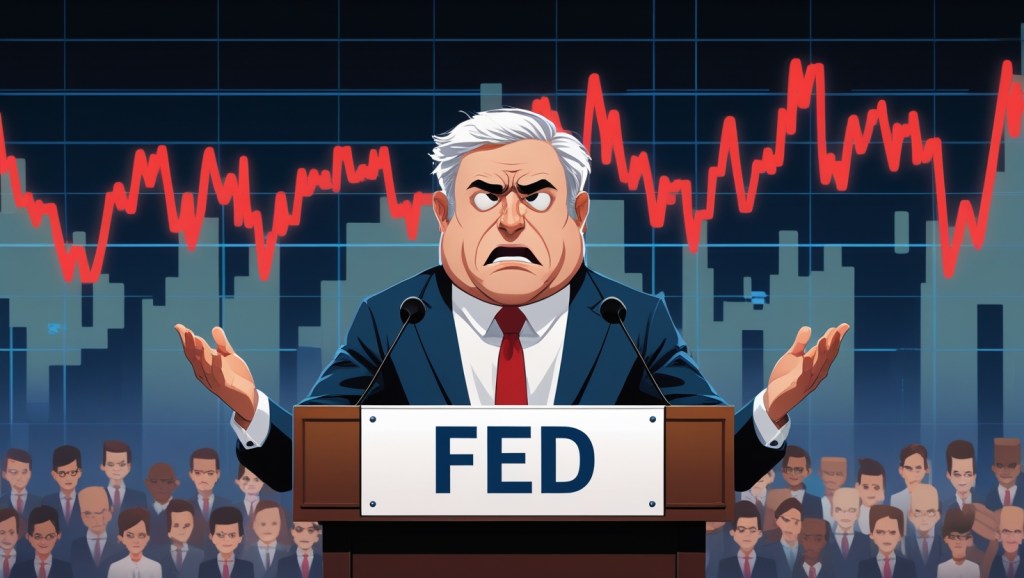
For decades, the U.S. Federal Reserve has used words as powerful tools. Whether through press conferences, policy statements, or subtle hints, financial markets have often responded immediately. But in 2025, something has changed. The market is no longer moving just because the Fed talks — it’s demanding action.
The Shift in Market Psychology
The Era of “Forward Guidance” Is Fading
The strategy known as “forward guidance”, where central banks use language to steer expectations, was effective in times of uncertainty — especially during the 2008 crisis and the 2020 pandemic. But now, with inflation still a concern and growth slowing, investors are growing skeptical.
“Markets are telling the Fed: We’ve heard the words. Now prove it.” — Yahoo Finance, April 2025
Why Markets Aren’t Reacting Like Before
Inflation Fatigue
After years of battling high prices, traders are demanding more than promises. Rate hikes or cuts now seem insufficient to restore confidence if real economic pain isn’t addressed.
Data, Not Dialogue
Institutional and retail investors are leaning more on hard data — job reports, earnings, GDP growth — rather than Fed speeches. Actions, not words, are moving the Dow and S&P 500.
What This Means for Investors
Short-Term Volatility Could Rise
As markets detach from verbal cues, swings based on real results (corporate earnings, oil prices, geopolitical risks) become stronger and more unpredictable.
Long-Term Planning Becomes Key
Buy-and-hold investors should focus on:
Diversifying across sectors and asset classes
Monitoring actual policy moves, not just intentions
Prioritizing quality companies with resilient balance sheets
How to Navigate This New Environment
✅ Don’t react to every speech: Look for policy confirmation through actual rate changes or fiscal programs ✅ Watch global cues: Central banks worldwide may diverge in strategies — creating new opportunities or risks ✅ Stay informed, not emotional: Headlines may overhype minor remarks. Dig deeper.
The age when a single sentence from the Fed Chair could shake global markets may be ending. In its place, we’re entering a more data-driven, action-based investing landscape — one where investors need to read between the lines, not just listen.
For everyday investors, this shift could be a blessing in disguise. With more focus on fundamentals and less on market noise, there’s opportunity to build a more stable, long-term financial plan.
In 2025, oil prices are once again in the spotlight. With global tensions, production cuts from OPEC+, and rising demand, the cost of crude oil has surged — affecting everything from your daily commute to your investment portfolio. But what does this mean for you as a consumer and investor?
Let’s break down the causes, consequences, and smart financial moves to make during a spike in oil prices.
Why Are Oil Prices Rising in 2025?
Several factors are contributing to the latest surge:
1. OPEC+ Production Cuts
The oil cartel, led by Saudi Arabia and Russia, has announced coordinated output reductions to stabilize prices. This limits global supply while demand continues to grow.
2. Geopolitical Tensions
Escalating conflicts in the Middle East and new sanctions on oil-exporting countries have disrupted supply chains, adding upward pressure on prices.
3. Post-Pandemic Demand
Global transportation, manufacturing, and travel have fully recovered post-COVID, pushing oil demand higher — especially in fast-growing economies.
How It Affects Your Daily Life
You may have already felt it:
Gas prices at the pump have jumped.
Electricity bills are increasing in fuel-dependent regions.
Airfare and shipping costs are rising, which can inflate the price of goods.
In short, inflation creeps in as oil-dependent sectors pass on higher costs to consumers.
Winners and Losers in the Market
Sectors That Benefit:
Energy Companies (like ExxonMobil, Chevron)
Oil ETFs (such as XLE, VDE)
Commodities Funds tied to crude futures
Sectors That Suffer:
Transportation and Airlines
Retailers with tight margins
Manufacturing and logistics-heavy businesses
Smart Investment Strategies in Times of Oil Volatility
1. Diversify with Energy Exposure
You don’t have to go all-in, but adding energy stocks or ETFs to your portfolio can hedge against oil shocks.
2. Look Into Renewable Energy
Rising oil prices often spark interest in green alternatives. Funds like ICLN (iShares Global Clean Energy) tend to see capital inflows during these times.
3. Watch Inflation-Protected Assets
Consider TIPS (Treasury Inflation-Protected Securities) or real assets like real estate and commodities that can withstand inflationary pressure.
Bonus Tip: Use Smart Investment Apps
Several platforms now offer curated portfolios or thematic investing around energy. Apps like M1 Finance, Public, or Wealthfront allow you to build a strategy based on your financial goals and market conditions.
Conclusion
Oil prices affect more than just your car — they ripple across global markets and everyday life. Understanding the why and how helps you not only brace for higher costs but also position your portfolio wisely.
Whether you’re a seasoned investor or just starting out, rising oil prices are a reminder: stay informed, stay diversified, and think long term.
Warren Buffett during an interview on April 11, 2023, in Tokyo, Japan. Photo by Asahi Shimbun/Getty Images, via CNN.
Warren Buffett is one of the most iconic investors in history — and his company, Berkshire Hathaway, has long been a symbol of value investing. In 2025, BRK.B (Berkshire Hathaway Class B stock) is once again gaining attention, with strong performance even in times of economic uncertainty. But should you still bet on Buffett this year, or is the legend past its prime?
Let’s break down the performance, long-term vision, and current market relevance of BRK.B — and what it all means for investors like you.
A Brief Look at Berkshire Hathaway and BRK.B
Founded by Warren Buffett, Berkshire Hathaway started as a textile company and evolved into a diversified investment giant. Its portfolio includes major stakes in Apple, Coca-Cola, Bank of America, and American Express — not to mention full ownership of companies like Geico and Dairy Queen.
BRK.B shares were created in 1996 to make the company more accessible to average investors (unlike BRK.A, which trades above $500,000 per share). Today, BRK.B is one of the most trusted tickers on Wall Street.
Why Is BRK.B Performing Well in 2025?
Even as inflation, rising interest rates, and political tensions make investors nervous, BRK.B has remained surprisingly resilient. Here’s why:
1. Conservative and Diversified Portfolio
Buffett’s investments are built on timeless sectors: finance, consumer staples, infrastructure, and tech (like Apple). These companies tend to weather market volatility better than trendy startups.
2. Strong Cash Position
As of early 2025, Berkshire holds over $150 billion in cash and equivalents. This gives the company massive flexibility to buy undervalued assets during downturns.
3. Share Buybacks
Berkshire continues to repurchase its own shares, boosting shareholder value and showing confidence in long-term performance.
Is It Still a Good Buy in 2025?
That depends on your investment style. BRK.B isn’t a high-growth tech stock, but it offers:
Stability during uncertain times
Exposure to a wide range of industries
A proven, disciplined investment approach
If you’re looking for consistent returns and a hedge against market chaos, BRK.B might still be one of the smartest bets.
The Buffett Philosophy: Long-Term Over Short-Term
Warren Buffett has always emphasized patience, value, and buy-and-hold investing. In his own words:
“The stock market is designed to transfer money from the Active to the Patient.”
In 2025, this mindset is more relevant than ever. As investors chase AI trends or meme stocks, Buffett’s steady strategy continues to outperform many high-risk alternatives.
Conclusion: A Safe Bet or an Outdated Approach?
BRK.B may not offer explosive growth, but it’s still one of the most solid, time-tested investments available — especially for those who value discipline and long-term thinking.
Should you still bet on Warren Buffett in 2025? If you believe in fundamentals, smart diversification, and resisting market noise — the answer is yes.
Photographer: Dimitrios Kambouris, via Getty Images
In the intricate world of finance, few names resonate with a sense of foresight and fearless conviction like Michael Burry. A trained physician turned legendary investor, Burry is best known for predicting the 2008 subprime mortgage crisis — a financial disaster that shook the global economy. His incredible journey from an outsider to a Wall Street icon remains a powerful example of how deep analysis and independent thinking can change the course of history.
Early Life and Career Transition
Michael James Burry was born in 1971 in San Jose, California. Despite facing challenges like losing an eye to cancer at a young age, he excelled academically and pursued a medical degree from Vanderbilt University School of Medicine. While completing his medical residency at Stanford, Burry spent his free time passionately studying financial markets and value investing.
His interest in finance grew so strong that he eventually left medicine altogether to focus on investing full-time — a bold decision that would later reshape his destiny.
The Birth of Scion Capital
In 2000, Burry founded his hedge fund, Scion Capital, using his own savings and funds from family and friends. Right from the start, Burry demonstrated an extraordinary talent for spotting undervalued investments. His investment philosophy was heavily influenced by Benjamin Graham (author of The Intelligent Investor) and Warren Buffett. He focused on deep fundamental analysis, seeking assets that were mispriced by the market.
Within a few years, Scion Capital delivered impressive returns, consistently outperforming major market indexes — but it was his audacious bet against the U.S. housing market that would make history.
The Bold Bet Against the Housing Market
In the mid-2000s, while the U.S. economy was booming and real estate prices were skyrocketing, Burry noticed troubling patterns in mortgage-backed securities (MBS). After meticulously analyzing the underlying loans, he realized that a significant portion of mortgages — especially subprime loans — were likely to default as adjustable rates reset.
Burry made a radical move: he purchased credit default swaps (CDS) to bet against these risky mortgage bonds. At the time, Wall Street viewed him as eccentric, even foolish. Many investors in his fund pushed back, unable to see the storm he foresaw.
Yet, as history shows, Burry was right. When the housing bubble burst in 2007–2008, Scion Capital profited massively, earning hundreds of millions of dollars for his investors — and solidifying Burry’s reputation as a financial visionary.
Popular Culture: “The Big Short” and Burry’s Legacy
Michael Burry’s story gained global recognition through the book “The Big Short” by Michael Lewis, published in 2010. Later, the story was adapted into the acclaimed 2015 movie “The Big Short”, where Burry was portrayed by actor Christian Bale. The film showcased his meticulous research, his struggles to convince others, and his unwavering commitment to data over popular opinion.
Burry’s portrayal in “The Big Short” highlighted key aspects of his personality:
His social awkwardness.
His obsessive attention to detail.
His resilience in the face of overwhelming skepticism.
The movie went on to win an Academy Award, further embedding Michael Burry’s place in modern financial folklore.
Life After the 2008 Crisis
After closing Scion Capital in 2008, Burry took time off but later returned to investing by opening Scion Asset Management. Since then, he has continued making bold predictions and investments:
Warning about market bubbles (including in tech stocks and cryptocurrencies).
Expressing concerns about government debt and monetary policy.
Investing in water assets, believing that water scarcity will be a major global issue.
Despite his media fame, Burry remains a deeply private individual, often communicating through sparse public statements and, occasionally, cryptic social media posts.
Lessons from Michael Burry’s Story
Independent Thinking Pays Off: Following the crowd rarely leads to exceptional results.
Deep Research Matters: True opportunities often lie beneath the surface.
Patience Is Critical: Conviction can require enduring long periods of doubt and resistance.
Risk Management Is Key: Betting against a system is dangerous — but with precise research and discipline, it can be rewarding.
Conclusion
Michael Burry’s journey from a medical resident to a financial legend reminds us that true insight often requires courage to stand alone. His prediction of the 2008 financial collapse not only changed his life but also altered the way many investors view market risks. In a world increasingly driven by trends and noise, Burry’s example of rigorous analysis, independent thought, and unshakable patience remains more relevant than ever.
Michael Burry isn’t just a man who got lucky once — he’s a living testament to the power of questioning consensus and trusting in thorough, uncomfortable truths.
📷 Image Credit: Official YouTube Channel of Social Security Administration
Understanding how Social Security functions is essential for anyone living and working in the United States. Whether you’re planning for retirement, facing a disability, or considering survivor benefits, Social Security plays a critical role in your financial future.
What Is Social Security?
Social Security is a government program established in 1935 through the Social Security Act. It provides financial benefits to retired workers, people with disabilities, and families of deceased workers. Funded primarily through payroll taxes (FICA), Social Security aims to offer a safety net to Americans throughout different stages of life.
Key Components of Social Security
Retirement Benefits: Monthly payments to individuals who have reached retirement age.
Disability Benefits: Financial support for those unable to work due to qualifying disabilities.
Survivor Benefits: Assistance provided to family members of deceased workers.
Supplemental Security Income (SSI): Additional support for elderly, blind, or disabled individuals with limited income or resources.
How Do You Qualify for Social Security Benefits?
To qualify for most Social Security benefits, you must earn “credits” by working and paying Social Security taxes. In 2025, you earn one credit for every $1,730 in earnings, up to four credits per year. Most benefits require at least 40 credits (approximately 10 years of work).
Important Qualification Points
Retirement Benefits: Usually require 40 credits.
Disability Benefits: Require varying credits based on your age at disability.
Survivor Benefits: Based on the work record of the deceased.
When Can You Start Collecting Social Security?
Early Retirement: Starting at age 62 (with reduced benefits).
Full Retirement Age: Between 66 and 67, depending on your birth year.
Delayed Retirement Credits: If you delay collecting benefits until age 70, your monthly payment increases.
How Is Your Social Security Benefit Calculated?
Benefits are based on your highest 35 years of earnings. The Social Security Administration (SSA) uses a specific formula that considers your Average Indexed Monthly Earnings (AIME) to determine your Primary Insurance Amount (PIA).
Factors That Affect Your Payment
Work History: Higher lifetime earnings = higher benefits.
Age You Start Receiving Benefits: Early claims reduce payments.
Cost-of-Living Adjustments (COLA): Annual increases based on inflation.
How to Apply for Social Security Benefits
You can apply for benefits through three main channels:
Online: At the official SSA website (ssa.gov).
Phone: By calling the Social Security Administration directly.
In-Person: At a local Social Security office (by appointment).
Common Myths About Social Security
“Social Security Will Run Out Soon”
While funding challenges exist, Social Security is not disappearing. Adjustments may occur, but benefits will likely continue in some form.
“You Lose Benefits If You Work While Collecting Social Security”
You can work while receiving benefits. However, if you are under full retirement age, your benefits may be temporarily reduced based on earnings.
Why Social Security Still Matters
Social Security remains one of the most critical pillars of retirement planning and financial security in the U.S. It provides a guaranteed income that adjusts for inflation, offering protection against poverty in old age, disability, and loss of a family breadwinner.